
“The evidence from other states is unambiguous: over-taxation kills cannabis markets’ ability to displace illicit sales and generate sustainable revenue.”
By Max Jackson, Cannabis Wise Guys
Pennsylvania Gov. Josh Shapiro’s (D) 2026/27 budget proposal to legalize marijuana projects $729 million in first-year cannabis revenue to address Pennsylvania’s $4.8 billion structural deficit. It’s a politically appealing pitch: legalize cannabis, capture tax dollars currently flowing to neighboring states and fund education and infrastructure without raising income taxes.
But Shapiro himself acknowledged the central challenge in his budget proposal: approximately 60 percent of customers at New Jersey and Maryland border dispensaries are Pennsylvania residents. Nearly half of Pennsylvania’s population lives in a county bordering a state with legal cannabis. Pennsylvania residents are already cannabis consumers—they’re just funding other states’ tax programs instead of Pennsylvania’s.
The $729 million projection assumes those customers will shift to Pennsylvania dispensaries once adult-use sales begin. But that only happens if Pennsylvania’s legal market can compete on price, quality and access with the options consumers already use: border-state dispensaries, illicit dealers and THCA hemp shops.
And the fastest way to guarantee they don’t is to design a tax structure that treats cannabis as a captive revenue source while expecting it to compete in an open market.
The Tax Stacking Problem
When states layer multiple taxes on cannabis to maximize short-term revenue extraction, they create a predictable failure pattern.
A state excise tax of 10-15 percent, combined with local municipal taxes of 3-5 percent, plus standard sales tax of 6-7 percent, creates cumulative tax rates in the 20-25 percent range or higher.
That pricing premium makes legal cannabis uncompetitive with illicit alternatives—and consumers making purchasing decisions don’t distinguish between “fair” and “unfair” taxes. They see the final out-the-door price and decide whether it’s worth paying.
Pennsylvania’s challenge is even more acute because of the border dynamics Shapiro acknowledged.
A Pennsylvania resident living in a border county isn’t just choosing between legal and illicit options—they’re choosing between Pennsylvania’s dispensary and the one thirty minutes away in Ohio, Maryland or New Jersey. If Pennsylvania’s tax structure makes its legal cannabis 20-30 percent more expensive than neighboring states, consumers will keep doing what they’re already doing: buying elsewhere.
Michigan’s Live Experiment: What Happens When You Kill a Working Market
Michigan built one of the country’s most successful legal cannabis programs by allowing competitive licensing and tax rates low enough to let legal operators undercut illicit pricing. The result was robust illicit-market displacement and growing tax revenue.
Then, facing budget pressures, Michigan legislators imposed an additional 24 percent wholesale tax on cannabis beginning January 1, 2026 to fund road repairs. The state is now conducting a live experiment in whether you can retroactively over-tax a working market without driving consumers back to illicit options or across state lines.
Early indicators suggest the answer is no—operators are warning of closures, and consumer advocates are predicting a resurgence of illicit market activity as legal prices become uncompetitive.
Pennsylvania legislators should watch carefully. Michigan had the advantage of an established legal market with consumer habits already formed. Pennsylvania could be launching directly into a high-tax environment, asking consumers who currently have multiple options to choose the most expensive one.
The Wholesale Tax Mistake California Already Made
California initially imposed a per-ounce wholesale cultivation tax, treating cannabis as a commodity that could absorb taxation at every supply chain stage. The result was predictable: cultivators couldn’t survive the economics, wholesale prices collapsed and the illicit market thrived because legal operators couldn’t compete on price while carrying a tax burden their illicit competitors didn’t face.
California repealed its wholesale cultivation tax in 2022 after recognizing it was actively undermining the legal market.
If Pennsylvania imposes wholesale cultivation taxes in addition to retail-level taxation, the state will replicate California’s mistake—cultivators will face impossible economics, and the tax revenue Pennsylvania projects will never materialize because the businesses expected to generate it won’t survive.
The Industry Infrastructure Problem
Shapiro’s budget allocates $25 million for social equity programs. But the deeper problem is what happens when states extract maximum tax revenue from cannabis to plug general budget deficits: the industry can’t fund the regulatory infrastructure, technical assistance programs and support systems it needs to function.
Cannabis regulation is expensive. State regulators need funding for inspections, compliance monitoring, laboratory oversight and enforcement.
Social equity programs require technical assistance, business development support and access to expertise to help new operators survive the critical first years, when most cannabis businesses operate at a loss.
If Pennsylvania siphons all cannabis tax revenue out of the industry to address unrelated budget shortfalls, these systems don’t get built—and the market fails to develop the way revenue projections assume it will.
Equity licenses without operational support systems are performative policies that set participants up for failure. But the same principle applies across the entire market: if the industry can’t retain enough revenue to build functional infrastructure, compliant businesses struggle, regulatory oversight weakens and the illicit market wins.
The Revenue Only Works If the Market Works
Shapiro is correct that Pennsylvania is losing potential tax revenue to neighboring states. He’s correct that cannabis legalization could capture some of that revenue. But the $729 million projection is only realistic if Pennsylvania builds a market that works—for consumers who need competitive pricing and convenient access, and for businesses that need viable economics and clear regulations.
The evidence from other states is unambiguous: over-taxation kills cannabis markets’ ability to displace illicit sales and generate sustainable revenue. Michigan is discovering this in real-time. California learned it and reversed course.
Pennsylvania has the advantage of learning from these mistakes instead of repeating them.
Shapiro stated the core problem: 60 percent of border dispensary customers are Pennsylvania residents. Those consumers have demonstrated they’ll travel for their cannabis. Pennsylvania’s legal market must compete for their business—it can’t assume their compliance. The fastest way to lose that competition is to design a tax structure that makes Pennsylvania’s legal cannabis the most expensive option in a fifty-mile radius.
Pennsylvania residents are already cannabis consumers. The question isn’t whether they’ll buy cannabis—it’s whether Pennsylvania will build a market competitive enough to capture their business, or whether they’ll keep funding New Jersey, Maryland, Ohio and the illicit market instead.
The $729 million budget projection depends entirely on getting that answer right.
Max Jackson is the founder of Cannabis Wise Guys and specializes in translating between cannabis operations, investment and public policy.
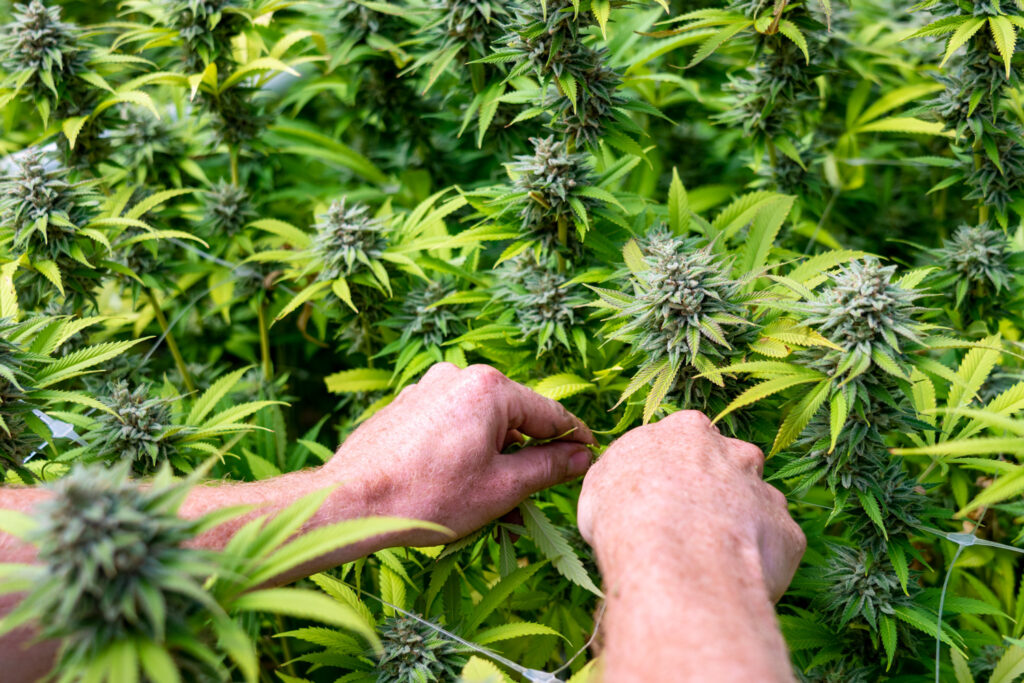
Photo courtesy of Max Jackson.
Marijuana Moment is made possible with support from readers. If you rely on our cannabis advocacy journalism to stay informed, please consider a monthly Patreon pledge.
