
“Something real—something built with care—is being dismantled by people who never had to love it to profit from it.”
By John Grady, Slaphappy Hemp Company
A recent Marijuana Moment op-ed authored by Max Jackson of Cannabis Wise Guys argues that the hemp industry killed itself and that no one—except the bad actors in the sector itself—is to blame for the result.
The bad actors the piece describes are real, and some of the failures it documents are accurate. But the conclusion—that state legislatures are fairly responding to industry abuse—lacks strength. What’s actually moving through those capitols is market consolidation dressed as consumer protection. The bad actors provided the pretext. The legislation is doing the work.
This was never a hemp problem or a marijuana problem. It was always a one plant problem—and it demands a one plant solution.
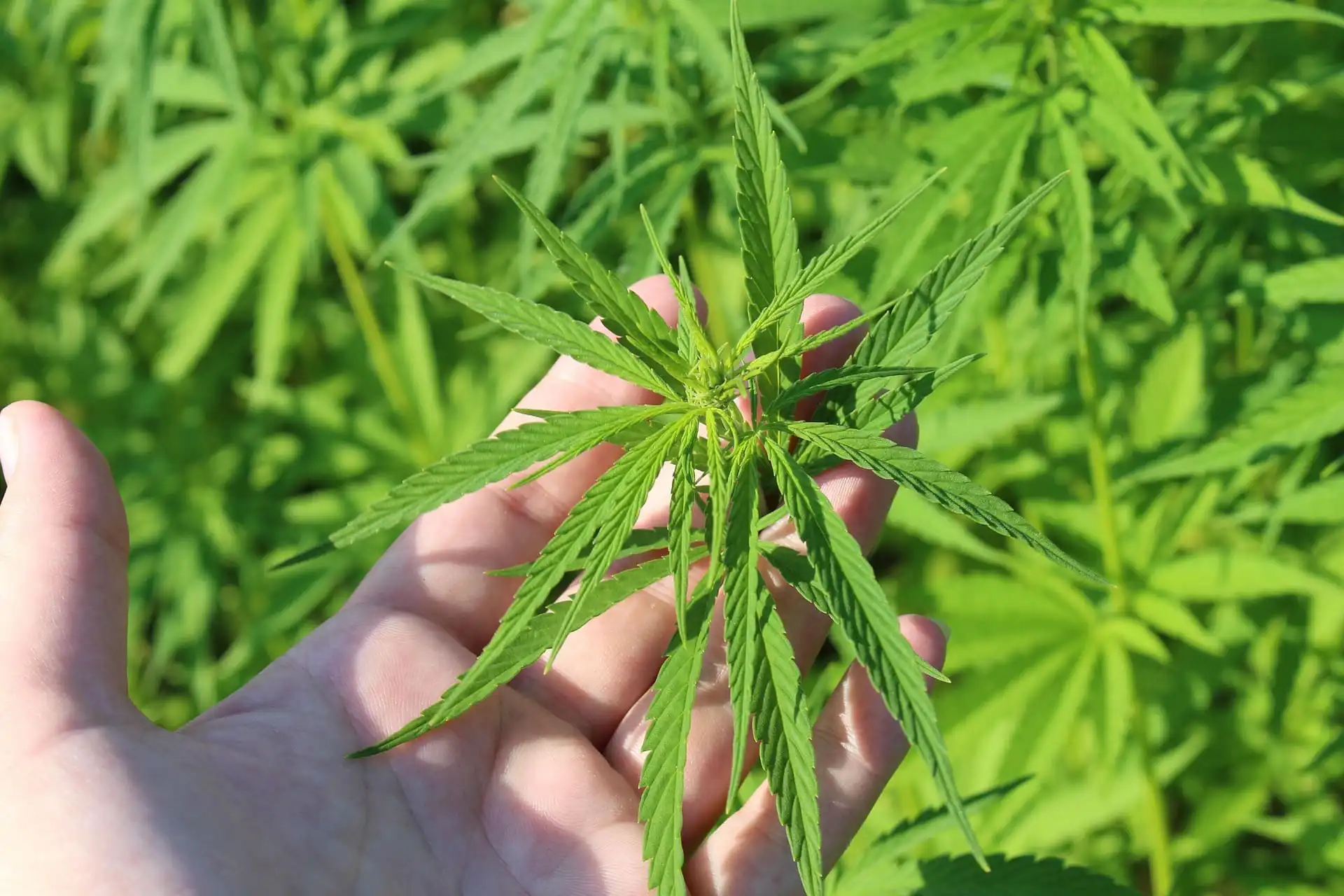
As a hemp farmer, I have stood in my field from dusk to dawn and watched my plants breathe—leaves turning down through the night, rising again to reach for the sun by morning. I have spent hours studying them, the way the light moves through the canopy at different times of day, the way a cola catches the last hour of light and holds it. I know this plant. I love this plant. That is what you should know before you read another word.
The Pretext Is Real. The Response Is Not Proportionate
Yes, the 500 mg THC hemp gummy jars that Jackson’s op-ed points to are real. Yes, some hemp retailers sold products without age verification. Yes, bad actors exploited the regulatory gap. None of that is in dispute.
But consider the math. A gram of state-regulated marijuana flower at 23 percent THC—a common potency in licensed dispensaries—contains 230 mg of THC. A standard eighth at 3.5 grams contains over 800 mg. The 500 mg gummy jar that Jackson says triggered this national legislative campaign contains less THC than a single eighth of flower sold legally at dispensaries every day, but nobody in the cannabis space is proposing to ban dispensary flower.
States aren’t responding to high-dose hemp products by capping dosage. They are eliminating the independent hemp retail channel entirely and routing all sales through licensed marijuana dispensaries. That is not a proportionate response. That is an opportunity the 500 mg jar created.
The hemp industry wasn’t ignoring the problem. In Missouri alone, multiple regulatory bills were introduced to enact age verification, independent testing, labeling requirements and licensing fees proportionate to small business scale. Michigan had similar legislation moving through its Senate. Minnesota’s model—licensing, age-gating, labeling, per-serving THC limits—is now being cited by federal legislators as proof that state regulation can address public safety without blanket prohibition.
The framework existed, but the will to use it fairly did not.
I Watched It Happen
On March 31, I stood in the Missouri Capitol when the Senate passed HB 2641, which if enacted into law will remove many currently legal hemp products from the market. The Senate Fiscal Oversight Committee asked the bill’s sponsor to meet with the hemp industry, but he declined. The follow-up happened at 10 p.m. without public notice and without a single hemp industry voice in the room. The bill then sped through the legislature and is now on Gov. Mike Kehoe’s (R) desk.
Texas tells a similar story. The legislature there tried to ban hemp, but Gov. Greg Abbott (R) vetoed it. Subsequent efforts to pass a ban in two special sessions failed. Regulators then accomplished through administrative workarounds what lawmakers couldn’t do through legislation—until a Travis County judge paused the rules as an illegal separation of powers violation. When the democratic process doesn’t deliver the desired outcome, the regulatory process is being used to finish the job.
This is not an industry collapsing under the weight of its own failures. This is an industry being eliminated through coordinated legislative, regulatory and legal pressure.
The Science Being Cited Doesn’t Support The Conclusion
Jackson’s op-ed on the alleged failures of the hemp industry cites a peer-reviewed study showing 62.5 percent of CBD websites and 30 percent of Delta-8 websites required no age verification, and that and not one product out of twenty required verification at delivery.
This analysis of the behavior of just 20 retailers is now being used to indict a $70 billion industry generating $13 billion in wages. While peer review confirms the methodology was sound, it does not validate the sample.
Every age-restricted product sold online—alcohol, tobacco and firearms—faces the same self-reported confirmation challenge. Presenting it as a hemp-specific failure while the study’s own authors acknowledge it applies universally is not science informing policy.
Who Built This Framework And Who Benefits
The marijuana industry spent years lobbying for its complex, expensive regulatory framework. They wrote those rules. Now the argument is that hemp must be forced through that same framework—the one they built, the one they profit from.
Sierra Nevada didn’t put Budweiser out of business. Craft brewers expanded the culture and the big guys survived. Nobody routed craft beer through Anheuser-Busch distribution networks to protect the legacy industry. Age verification, testing and labeling enforced equally—without routing every transaction through a specially licensed channel—is the model.
If the marijuana industry believes its own standards are too burdensome, the argument should be for reform—not for imposing them on a competitor as a market entry barrier.
What We Built
Across the hemp industry there are people who spend nights getting it right. The right name. The right scent. The right formula. Hours of research and iteration and failure and trying again—driven not by a licensing requirement but by a genuine obsession with what this plant can do for people. Farmers and small operators who looked at each other one evening and said, “Look at us—doing this better and still cheaper.”
And the feedback came. Real people. Real relief. Veterans. Cancer patients. People who had tried everything else and found something that worked.
For years the hemp industry lobbied for exactly this kind of regulatory framework. Age verification. Testing standards. Labeling requirements. What industry fights for its own regulation? One that believes in what it is selling.
The argument is always the same. Unregulated must equate to untested and sold to children. Nothing about this feels unintended. Something real—something built with care—is being dismantled by people who never had to love it to profit from it. And nobody in power seems to be asking what is actually being lost before it’s gone.
What Actually Needs to Happen
One standard should apply to all intoxicating cannabinoid products regardless of label.
Steve DeAngelo—co-founder of Harborside, one of the first six licensed dispensaries in the U.S.—helped establish the One Plant Alliance last November on exactly that principle: age verification, testing and labeling applied equally across every sector of the plant. No mandatory dispensary routing. Three science-based standards. A level playing field.
Congress is moving the same direction. Sens. Ron Wyden (D-OR) and Jeff Merkley (D-OR) introduced the Cannabinoid Safety and Regulation Act with provisions for age verification, testing, labeling, Food and Drug Administration oversight and no blanket ban. The separate bipartisan Hemp Planting Predictability Act would delay the November 2026 federal deadline to give Congress time to build a permanent framework.
States racing to eliminate this industry before that process concludes may find they have done the consolidators’ work for them—and left their own farmers and patients with nothing to show for it.
One Plant
My wife Kara and I built the Hemporium in Rosebud, Missouri. People joke it’s the Cracker Barrel of weed. Walk in and you’ll find rope and hemp seed oil alongside flower and tinctures and beverages. People who never expected to walk into a place like this walk out knowing more than they came in with. Not a loophole, but a relationship with a plant and with each other.
A market built by activists, patients, farmers and small operators—people who fought for access long before recreational marijuana became a multi-billion dollar industry state by state—is being restructured to benefit a consolidating group of national and multinational operators.
Legal recreational marijuana arrived and the lines got redrawn. We all argued for this plant to be treated like tomatoes. What happened?
Cypress Hill said it plainly: “The marijuana plant is the hemp plant.” Willie Nelson straddles both markets without apology. His footprint is everywhere because he chose partnership over war.
The multi-state operator marijuana businesses could do the same. Their brands could be in every Hemporium in America—in every community that built a relationship with this plant before the lawyers arrived. The One Plant Alliance built the framework. Congress is building the bridge.
The only thing missing is the will to stop the war.
John Grady is a hemp farmer and co-founder of Slaphappy Hemp Company and the Hemporium in Rosebud, Missouri.
Marijuana Moment is made possible with support from readers. If you rely on our cannabis advocacy journalism to stay informed, please consider a monthly Patreon pledge.
