

The Internal Revenue Service (IRS) says that while marijuana industry workers are not currently eligible under the “No Tax on Tips” law signed by President Donald Trump last year to write off any gratuities they receive, that could change in the event of federal legalization.
The agency discussed the issue in a final rule for implementing the policy that was published in the Federal Register on Monday.
One person who submitted a public comment in response to an earlier draft rule that was circulated in September “noted that State-legal cannabis industry workers operate in regulated, State-compliant industries and should not be excluded merely because their employers engage in commerce that involves a federally classified controlled substance,” IRS said in the new filing.
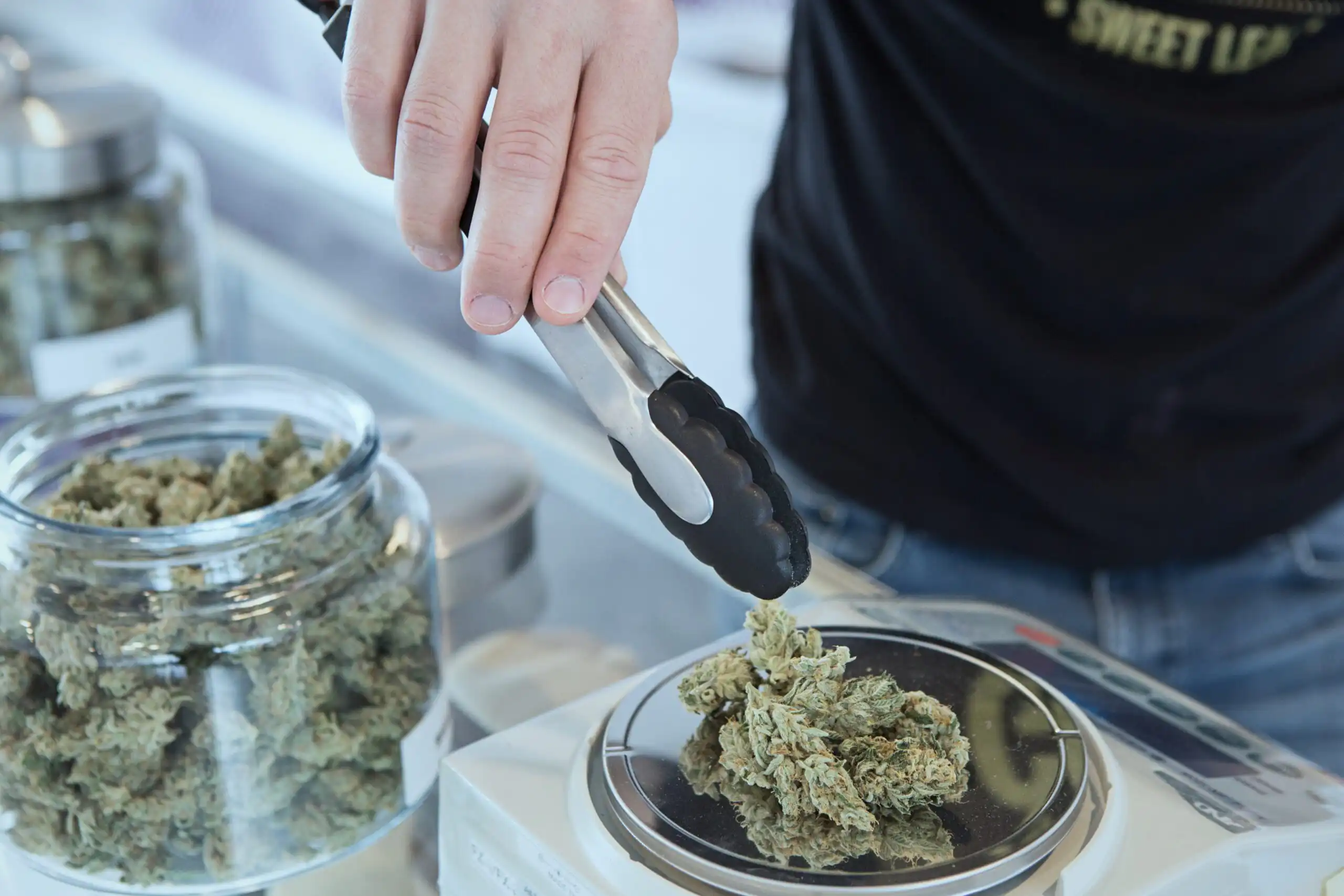
It is not uncommon for so-called budtenders to receive tips from customers at the point of purchase in marijuana dispensaries, similar to bartenders who serve alcohol or baristas who pour coffee.
However, the new IRS rule says that “qualified tips” do not include those “received while performing services that are misdemeanors or felonies under applicable law”—and cannabis remains federally illegal.
“Workers in the cannabis industry must meet statutory and regulatory requirements like any other employee to be eligible for the deduction for qualified tips,” IRS said in response to the public comment. “Tips received by these workers must be received in an occupation that is included on the List of Occupations that Receive Tips and must not be received for a service the performance of which is a felony or misdemeanor under applicable law, including under Federal law, to be qualified tips eligible for the deduction under section 224.”
While current federal law and some state laws consider marijuana to be illegal, “if Federal law changes, making certain marijuana-related transactions legal, and those same transactions are legal under State law, then tip amounts received in such transactions may be qualified tips if all other requirements for qualified tips are met. No change was made in the final regulations in response to this comment,” the agency said.
Meanwhile, IRS told the U.S. Tax Court in a filing that while marijuana may soon be rescheduled under federal law, that doesn’t currently exempt state-legal cannabis businesses from a law known as 280E that bars them from taking federal tax deductions.
In response to a petition to the court filed by the New Mexico marijuana business Ultra Health—which challenged the conventional interpretation of the IRS code, which applies to tax deduction claims connected to the sale of Schedule I and Schedule II drugs under the Controlled Substances Act (CSA)—IRS said the issue has already been soundly settled by Congress and various federal courts.
The Congressional Research Service (CRS) has separately discussed prior attempts to challenge 28oE as it applies to state-legal marijuana businesses. In a report published in February, CRS pointed out that judges in the Tax Court issued a majority opinion upholding 280E and determining that the statute doesn’t violate the U.S. Constitution “because the disallowance of deductions does not constitute a ‘penalty’ for the purposes of the Eighth Amendment.”
Meanwhile, IRS in 2024 warned the marijuana industry that some companies have, without a “reasonable basis,” filled out a supplementary form in an attempt to take federal tax deductions that they’re prohibited from receiving under a provision known as 280E.
The federal tax issue may ultimately be resolved if the Justice Department follows through on an executive order Trump issued in December directing officials to move cannabis to Schedule III “in the most expeditious manner,” but there haven’t been any updates on the status of that process in the months since the president signed the order.
Marijuana Moment is made possible with support from readers. If you rely on our cannabis advocacy journalism to stay informed, please consider a monthly Patreon pledge.
