

Scaling cannabis production isn’t just about output. It’s about process, consistency, and building systems that actually hold up under pressure. In cannabis, scaling sounds simple: grow more, produce more, sell more. For a while, that works. Then it doesn’t.
Most operators don’t hit a ceiling because of demand or even product quality. They hit it because the systems behind their business weren’t built to handle growth. What worked at a small scale—hand-filled pre-rolls, manual packaging, patchwork workflows—starts to break under pressure. Production slows, consistency slips, and labor costs climb.
At that point, the conversation usually turns to automation. But even that is often misunderstood.
The Real Problem Isn’t Output, It’s Process
There’s a tendency in cannabis to treat automation as a silver bullet. If production is struggling, the instinct is to buy a bigger, faster machine and hope it fixes everything.
In reality, scaling isn’t about jumping to the most advanced equipment available. It’s about understanding where your operation actually is, and what it needs next. Too much automation too early can create inefficiencies that are harder and more expensive to fix. Waiting too long can bottleneck growth entirely.
The operators who scale successfully tend to approach it differently. They build in layers. They focus on consistency before speed. They treat production as a system, not a collection of disconnected tools.
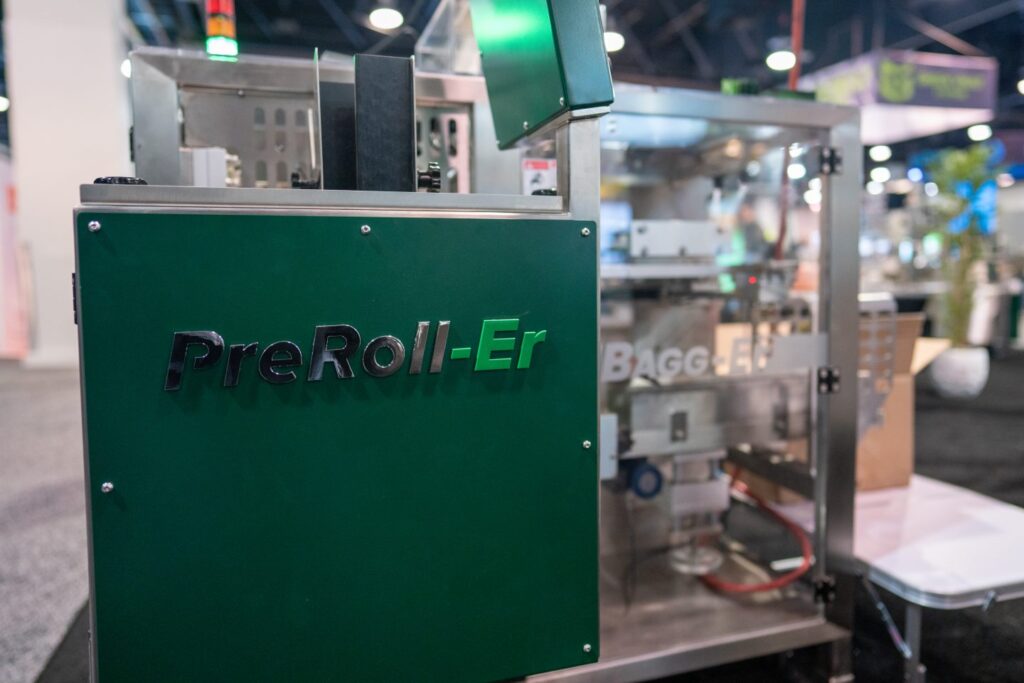
That’s the gap companies like PreRoll-Er are built around.
Founded in 2018, the Montreal-based company approaches automation as a long-term strategy rather than a one-time purchase. Instead of pushing one-size-fits-all solutions, its model is built around what it calls a “Road to Success”, a staged approach that aligns equipment, workflow, and output as a business grows.
Where Automation Actually Starts to Matter
Pre-roll production is one of the clearest pressure points in cannabis operations. At low volume, hand-filling can get the job done. But as demand increases, inconsistencies become harder to ignore, leading to uneven weights, inconsistent packing, and slower throughput.
Automation can solve those problems, but only if it’s implemented at the right time and in the right way.
Entry-level systems are designed to bring consistency to filling and compaction. From there, additional steps—finishing, shaping, and eventually higher-output production—can be layered in.

For operators looking to bridge that early gap without overinvesting, systems like the STR Starter Kit combine filling and finishing into a single workflow, pairing tools like the Spin-Er and BoxFinish-Er to create a more consistent, scalable foundation.
The goal isn’t just to move faster. It’s to produce the same result every time.
The Bottlenecks Most Operators Miss
One of the biggest misconceptions about scaling is that production is the main constraint. In practice, it’s often everything around production that slows a business down.
Once filling becomes efficient, other issues surface quickly: packaging, labeling, compliance, and finishing. These are the areas that tend to be overlooked early on, and they become more complex as operations expand across different markets with different regulatory requirements.

That’s where integrated systems start to matter more than individual machines. PreRoll-Er’s broader ecosystem now includes solutions like the Semi-Auto Flower Packaging line, an accessible entry point (around the $20K range) for operators looking to improve accuracy and reduce labor without jumping straight into full automation.

As operations grow, more advanced solutions like the Pre-Roll Packaging line are designed to handle tubes, jars, multipacks, and other formats, helping brands maintain efficiency and consistency across a wider range of SKUs.


Building Toward Sustainable Scale
No two cannabis operators scale the same way. Some grow steadily over time. Others expand quickly into new markets. Both paths come with different operational demands.
The common thread is that successful operators don’t overbuild. They invest in what they need now, with a clear path to what comes next. That might mean starting with smaller systems that improve consistency, then upgrading into more advanced equipment as demand increases.
PreRoll-Er’s staged approach reflects that reality. Rather than forcing operators into a single solution, it creates a progression from entry-level tools to full-scale automation that can evolve alongside the business.
It’s a practical model in an industry where conditions change quickly, and capital decisions carry real weight.
The Shift Toward Smarter Operations
As cannabis matures, the conversation around automation is shifting. It’s no longer just about speed or volume. It’s about building operations that can actually hold up over time.
That means reducing error rates, improving consistency, managing labor more efficiently, and staying compliant across multiple markets. It also means thinking beyond individual machines and focusing on how every part of the system connects.
Companies like PreRoll-Er are positioning themselves within that shift—not just as equipment manufacturers, but as partners in how production systems are designed and scaled.
Because at a certain point, growth stops being about how much you can produce. It becomes about how well your operation actually works.
Sponsored Content Disclaimer: This article is sponsored content produced in partnership with PreRoll-Er. While it follows High Times editorial standards for clarity and structure, it is part of a paid collaboration. Information about products, services, and operational approaches is provided by the sponsor and has not been independently verified by High Times.