


Bipartisan senators have introduced a bill to provide $30 million in funding annually to establish psychedelic-focused “centers for excellence” at U.S. Department of Veterans Affairs (VA) facilities, where veterans could receive novel treatment involving substances like psilocybin, MDMA and ibogaine.
As Trump administration officials continue to promote the therapeutic potential of psychedelics, with plans in the works to expand access and research opportunities, Sens. Ruben Gallego (D-AZ) and David McCormick (R-PA) filed the “Innovative Therapies Centers of Excellence Act” this week to help realize that goal.
A House companion version of the bill—sponsored by Congressional Psychedelics Advancing Therapies (PATH) Caucus co-chairs Reps. Lou Correa (D-CA) and Jack Bergman (R-MI)—was introduced last year, but it has not yet advanced in the chamber. The House and Senate measures are substantively identical, with minor formatting differences.
“When I came back from Iraq, I saw my fellow Marines, like so many other veterans, struggle to get the help they needed,” Gallego said in a press release. “Our veterans sacrificed so much for this country. We owe it to them to explore every treatment that can help them heal, including therapeutic uses of psychedelics that may finally break through when others haven’t. I’m proud to lead this bill to help the VA study promising alternative therapies that can save lives.”
The legislation, SB 4031, would require VA to designate at least five of its medical facilities as centers for excellence that would be charged with researching the therapeutic potential of psychedelics for conditions such as anxiety, depression, post-traumatic stress disorder (PTSD) and substance misuse.
It also lists several psychedelics that the lawmakers want to see explored: MDMA, DMT, ibogaine, ketamine and psilocybin. The VA under secretary could expand that list, and they could also add medical conditions that could be studied.
“Our veterans face disproportionately high rates of PTSD, depression, and substance use disorders due to combat exposure, trauma, and challenges that follow them home,” McCormick said. “Every day, 17 of them die by suicide. That must change.”
“The Innovative Therapies Centers of Excellence Act will ensure the VA keeps pace with the private sector by expanding access to cutting-edge treatments, like MDMA-assisted therapy, promoting ongoing research on veteran health outcomes, and closing gaps in treatment services for our veterans who need it most,” he said. “We owe them nothing less than our very best.”
There are a number of factors that VA would need to take into account as it selected the facilities that would host the centers of excellence, including regional distribution, partnerships with accredited medical schools, ability to recruit scientists “capable of ingenuity and creativity in medical research efforts,” data collection capabilities and more.
The legislation would provide for $30 million in appropriations for VA annually to carry out the research.
VA would need to submit a report with findings and recommendations to veterans-focused congressional committees within two years of enactment and each subsequent year. Among other things, the report would need to detail activities being carried out at the centers, key findings from the research projects and recommendations on ways to “improve the delivery of innovative therapies to veterans.”
Melissa Lavasani, founder and CEO of the Psychedelic Medicine Coalition (PMC), said on Thursday that the bill “represents more than a research initiative” because it’s a “step toward building the clinical and policy infrastructure needed to responsibly integrate innovative therapies into modern healthcare.”
“The VA can serve as a national proving ground, helping generate the evidence and care models that could ultimately benefit patients across the entire healthcare system,” she said.
Amy Rising, a veteran and psychedelics reform advocate, said the veteran community “should never feel like the country they served has run out of options for their healing.”
“We owe it to them to pursue every responsible, evidence-based pathway that could improve treatment for PTSD, depression, and other serious health conditions,” she said.
While it’s uncertain if or when the House or new Senate bills might advance, their introduction this session represents a continuation of a unique theme in Congress over recent years, with bipartisan lawmakers increasingly finding common ground on psychedelics research and therapy.
—
Marijuana Moment is tracking hundreds of cannabis, psychedelics and drug policy bills in state legislatures and Congress this year. Patreon supporters pledging at least $25/month get access to our interactive maps, charts and hearing calendar so they don’t miss any developments.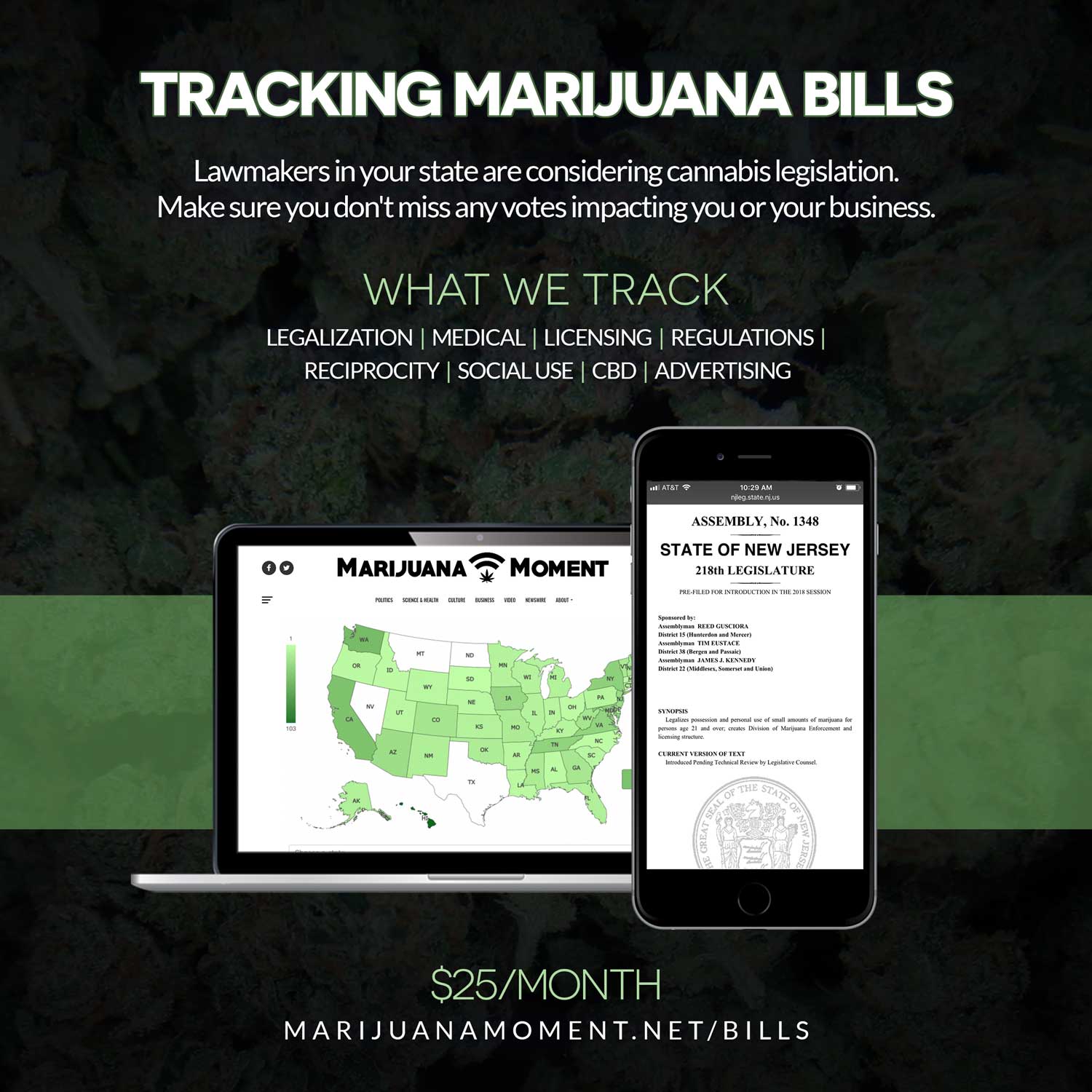
Learn more about our marijuana bill tracker and become a supporter on Patreon to get access.
—
Those lawmakers notably have allies in top positions within the Trump administration, including VA Secretary Doug Collins and U.S. Department of Health and Human Services (HHS) Secretary Robert F. Kennedy, Jr. who have both embraced psychedelic policy reform.
Kennedy recently told Joe Rogan on a podcast episode that the administration is “very anxious” to create a pathway for the novel therapies and that officials across federal agencies want to “get it out to the public as quickly as possible.”
Multiple veterans groups also recently advised congressional lawmakers about the need to continue exploring psychedelics and marijuana as alternative treatment options for the military veteran population at hearings on Capitol Hill. The Wounded Warrior Project (WWP) and Veterans of Foreign Wars (VFW) specifically cited the Innovative Therapies Centers of Excellence Act as an example of a reform they’re backing.
Correa and Bergman, the House sponsors of that legislation, separately filed a bill in January that would also promote research into the therapeutic potential of certain psychedelics in the treatment of serious mental health conditions experienced by veterans.
The bipartisan duo in January also discussed the importance of strategically advancing psychedelics reform in a way that mitigates bureaucratic conflict and the influence of outside interests. Even just one misstep could threaten to upend the movement, they said.
Last year, the VA secretary touted his role in promoting psychedelics access for veterans with serious mental health conditions, saying he “opened that door probably wider than most ever thought” was possible. The department in 2024 faced criticism after rejecting a grant application from an organization that helps connect veterans to programs abroad where they can receive psychedelic therapy to treat serious mental health conditions.
Meanwhile, in November, Kennedy, Vice President JD Vance, the FDA commissioner and other Trump administration officials attended a “Make America Healthy Again” summit that featured a session dedicated to exploring psychedelic medicine.
In June, Kennedy said his agency is “absolutely committed” to expanding research on the benefits of psychedelic therapy and, alongside of the head of FDA, is aiming to provide legal access to such substances for military veterans “within 12 months.”
The secretary also said in April that he had a “wonderful experience” with LSD at 15 years old, which he took because he thought he’d be able to see dinosaurs, as portrayed in a comic book he was a fan of.
Last October, Kennedy specifically criticized FDA under the prior administration over the agency’s “suppression of psychedelics” and a laundry list of other issues that he said amounted to a “war on public health” that would end under the Trump administration.
Photo elements courtesy of carlosemmaskype and Apollo.
Marijuana Moment is made possible with support from readers. If you rely on our cannabis advocacy journalism to stay informed, please consider a monthly Patreon pledge.
