
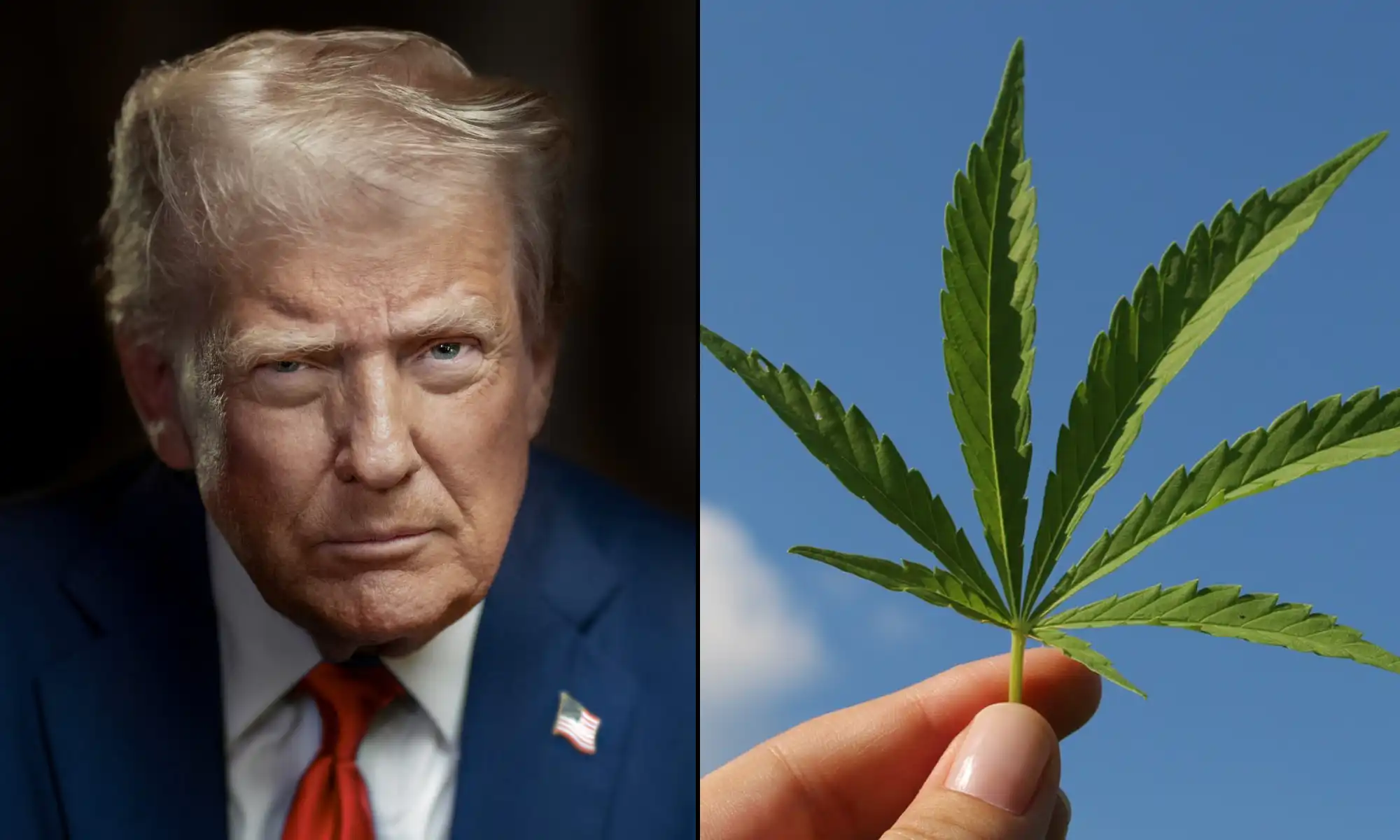
The first-ever White House drug czar says that while he loves President Donald Trump and “almost everything he does,” that affection doesn’t extend to the pending proposal to federally reschedule marijuana, which he described as a “gateway drug” that’s harming youth.
William Bennett, who served as education secretary under former President Ronald Reagan before becoming the first director of the Office of National Drug Control Policy (ONDCP), told Fox News Digital that cannabis “clouds focus and attention, which you obviously should have if you’re going to school.”
“So it clouds that, it interferes with that, it inhibits that. It is also the gateway drug. It leads to the use of other drugs,” he said. “Almost anybody who uses a so-called ‘more dangerous’ drug than marijuana has entered through the portal called marijuana.”
“I love Donald Trump. I love almost everything he does, but I don’t love this.”
Although Bennett said it’s possible to “concede the fact that marijuana can have some positive effects,” people can “at the same time understand that it’s, on the whole, a negative.”
Marijuana is “massively destructive of attention and focus among young people,” he said. “If you combine the dropout rate, the fact that attendance is down at schools and the use of marijuana among young people…it’s just another bad thing to happen to children.”
The rescheduling proposal that the former drug czar opposes wouldn’t federally legalize marijuana. Rather, moving cannabis from Schedule I to Schedule III of the Controlled Substances Act (CSA)—which Trump ordered the attorney general to do in an executive order in December—would recognize its medical value, free up certain research barriers and allow cannabis businesses to take federal tax deductions.
A White House spokesperson defended the administration’s rescheduling push in an earlier interview with Fox News Digital, stating that it’s part of his “pledge to expand medical research into applications of marijuana and cannabidiols.”
“The president’s historic action paved the way for the development of promising new treatments for American patients, especially veterans—and the presence of several leaders from law enforcement and veterans groups at the Oval Office signing is indicative of how President Trump continues to push the envelope to support our nation’s heroes,” White House spokesperson Kush Desai said.
Desai used the same statement in defending Trump’s cannabis action from criticism in December.
Bennett, for his part, said he is hopeful the marijuana reform push can be reversed.
“America’s always been a self-correcting society,” he said. “We do a lot of dumb things and bad things, but then we correct, and we can correct on this one.”
The rescheduling plan has been met with mixed reactions on Capitol Hill. For example, prohibitionist Rep. Andy Harris (R-MD) half-jokingly told Marijuana Moment last week that he felt the Justice Department should “take about 20 years” to finish the rescheduling process.
In December, Harris separately said Trump doesn’t have the authority to unilaterally reschedule marijuana via executive order. But while lawmakers could overrule any administrative move to enact the reform, it would be a “heavy lift” in the Republican-controlled Congress, he acknowledged.
Another GOP lawmaker on the other side of the debate, Congressional Cannabis Caucus co-chair Rep. Dave Joyce (R-OH), recently told Marijuana Moment that while marijuana rescheduling might not be at the top of the agenda for the Justice Department or White House amid competing interests, he and bipartisan colleagues will be ready when “opportunity does present itself.”
Joyce separately said last month that he doesn’t think the attorney general would seek to undermine the president’s executive order to move marijuana to Schedule III despite any personal reservations she may have about the policy change.
A DOJ spokesperson told Marijuana Moment last month that it had no “comment or updates” to share on the topic. However, an agency official more recently told Salon that “DOJ is working to identify the most expeditious means of executing the EO.”
That phrasing is notable, signaling that the department is uncertain about the administrative pathway to finalize rescheduling. The hope among advocates and industry stakeholders was that the process would be more simple, with a final signature on the existing reform proposal that was released following a scientific review initiated under the prior Biden administration.
DOJ has been notably silent on the issue in the weeks since Trump signed the order—even as the White House recently touted the president’s order as an example of a policy achievement during the first year of his second term.
Former Rep. Matt Gaetz (R-FL), Trump’s first pick for attorney general this term who ultimately withdrew his nomination, raised eyebrows last week after posting on X that he’s been told the Drug Enforcement Administration (DEA) is actively drafting a rescheduling rule and intended to issue it “ASAP.”
There’s some confusion around that point, however, as a rule is already pending before the Justice Department—and a new rule would presumably be subject to additional administrative review and public comment.
Earlier this month, meanwhile, the White House declined to comment on the status of the rescheduling process, deferring Marijuana Moment to the Justice Department.
A Democratic senator told Marijuana Moment earlier this month that it’s “too early to tell” what the implications of Trump’s cannabis order would be—saying that while there are “things that look promising” about it, he is “very concerned about where the DOJ will land.”
“The ability of the Trump administration to speak out of both sides of their mouth is staggering,” Sen. Cory Booker (D-NJ) said. “So I’m just going to wait and see right now. Obviously, there’s things that look promising—to end generations of injustice. I really want to wait and see.”
—
Marijuana Moment is tracking hundreds of cannabis, psychedelics and drug policy bills in state legislatures and Congress this year. Patreon supporters pledging at least $25/month get access to our interactive maps, charts and hearing calendar so they don’t miss any developments.
Learn more about our marijuana bill tracker and become a supporter on Patreon to get access.
—
Also last month, two GOP senators filed an amendment to block the Trump administration from rescheduling cannabis, but it was not considered on the floor.
Meanwhile, last month, DEA said the cannabis rescheduling appeal process “remains pending” despite Trump’s executive order.
A recent Congressional Research Service (CRS) report discussed how DOJ could, in theory, reject the president’s directive or delay the process by restarting the scientific review into marijuana.
Attorney General Pam Bondi separately missed a congressionally mandated deadline last month to issue guidelines for easing barriers to research on Schedule I substances such as marijuana and psychedelics.
Marijuana Moment is made possible with support from readers. If you rely on our cannabis advocacy journalism to stay informed, please consider a monthly Patreon pledge.
