
Virginia’s House and Senate have given initial approved to two differing versions of bills to legalize marijuana sales in the Commonwealth—teeing up final votes and bicameral negotiations on the reform while also advancing separate legislation to provide a pathway to resentencing for people with past cannabis convictions.
On Monday, the House passed a marijuana sales measure from Del. Paul Krizek (D) on second reading—and the Senate did the same with its version from Sen. Lashrecse Aird (D)—setting the stage for final floor votes in their respective chambers on Tuesday, which is the deadline for bills to cross over from their originating chamber to the other body.
The Senate also gave final third reading approval to a separate resentencing bill, sponsored by Senate President Pro Tem Louise Lucas (D), in a 21-17 vote on Monday, while the House version from Del. Rozia Henson, Jr. (D) passed in a voice vote on second reading.
While both House and Senate marijuana sales measures are aimed at giving adults a legal means of buying cannabis, the possession and home cultivation of which was legalized in the state in 2021, there are several substantive differences that will need to be resolved before the reform potentially goes to the governor’s desk.
Those differences between the chambers’s versions include the start date for legal sales, cannabis tax rates and conversion fees for current medical marijuana businesses to participate in the recreational market, among other issues.
“This bill establishes a framework to create a regulated retail market administered by the Virginia Cannabis Control Authority with robust licensing oversight and enforcement built into the process,” Krizek said on Monday, adding that “we have had a number of years now where we’ve been perfecting this bill…and even tinkered with it all the way up until today.”
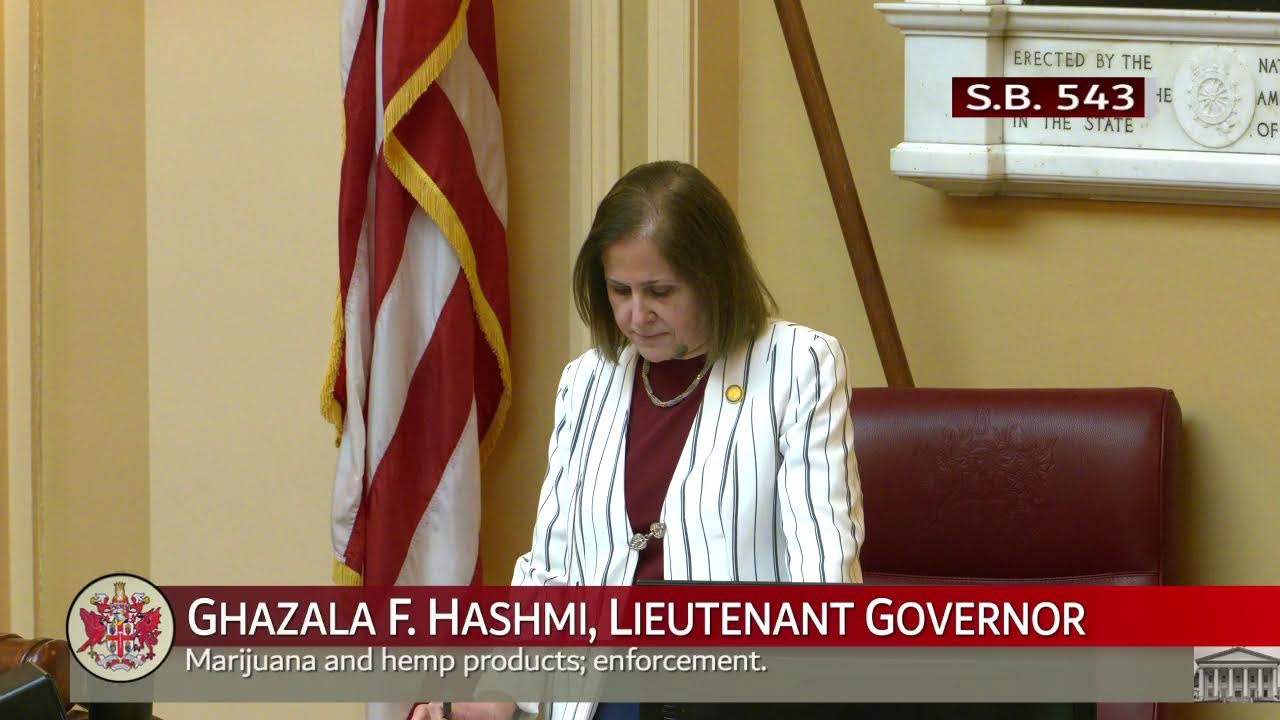
There was no substantive discussion about the Senate bill on the floor of that chamber on Monday, but senators recently clashed in committee about amendments to the body’s version of the bill that would have added new penalties for illegal cannabis activity.
The amendments at issue from the Courts of Justice Committee included penalties for consumers who buy from unlicensed sources, the recriminalization of cannabis possession by people under 21 and making sales a class 1 misdemeanor for a first offense and a crime punishable by mandatory jail time for a second offense. As revised, the bill would have also raised the penalty for unlicensed cultivation to a felony punishable by up to five years in jail and made it a felony to transport with intent to distribute cannabis across state lines.
But the Finance and Appropriations Committee reversed the amendments last week amid pressure from a coalition of advocacy groups that sent a letter to senators saying they undermined the “intent” of the legislation and the “will of the people” by adding criminal penalties for certain cannabis-related activity.
Despite some key differences, both chambers’ commercial sales bills largely align with recommendations released in December by the legislature’s Joint Commission to Oversee the Transition of the Commonwealth into a Cannabis Retail Market.
Since legalizing cannabis possession and home cultivation in 2021, Virginia lawmakers have worked to establish a commercial marijuana market—only to have those efforts consistently stalled under former Gov. Glenn Youngkin (R), who twice vetoed measures to enact it that were sent to his desk by the legislature.
Here are the key details of the Virginia marijuana sales legalization legislation, SB 542 and HB 642:
- Adults would be able to purchase up to 2.5 ounces of marijuana in a single transaction, or up to an equivalent amount of other cannabis products as determined by regulators.
- The House bill sets the state date for legal sales as November 1, 2026, while the Senate measure would allow them to begin on January 1, 2027.
- The Senate bill would set an excise tax on cannabis products of 12.875 percent, in addition to a 1.125 percent state sales tax and a mandatory 3 percent local tax. The House measure would apply an excise tax of 6 percent as well as a 5.3 percent retail sales and use tax, while allowing municipalities to set a local tax of up to 3.5 percent.
- Under the House bill, the Virginia Cannabis Control Authority would oversee licensing and regulation of the new industry, while the Senate legislation tasks that to a new combined Alcoholic Beverage and Cannabis Control Authority.
- The House bill calls for revenue to be distributed to a new Cannabis Equity Reinvestment Fund (60 percent), early childhood education (10 percent), the Department of Behavioral & Developmental Health Services (25 percent) and public health initiatives (5 percent). The Senate proposal, meanwhile, would put 30 percent toward the equity reinvestment fund, 40 percent for early childhood eduction, 25 percent to the behavioral and developmental health services department and 5 percent to public health initiatives.
- Local governments could not opt out of allowing marijuana businesses to operate in their area.
- Delivery services would be allowed.
- Serving sizes would be capped at 10 milligrams THC, with no more than 100 mg THC per package.
- Existing medical cannabis operators could enter the adult-use market if they pay a licensing conversion fee that is set at $15 million in the Senate bill and $10 million in the House measure.
- Cannabis businesses would have to establish labor peace agreements with workers.
- A legislative commission would be directed to study adding on-site consumption licenses and microbusiness cannabis event permits that would allow licensees to conduct sales at venues like farmers markets or pop-up locations. It would also investigate the possibility of the Virginia Alcoholic Beverage Control Authority becoming involved in marijuana regulations and enforcement.
Newly sworn-in Gov. Abigail Spanberger (D) supports legalizing adult-use marijuana sales.
Meanwhile, House and Senate lawmakers are also advancing separate legislation to provide resentencing relief for people with prior marijuana convictions.
The legislation would create a process by which people who are incarcerated or on community supervision for certain felony offenses involving the possession, manufacture, selling or distribution of marijuana could receive an automatic hearing to consider modification of their sentences.
The measure applies to people whose convictions or adjudications are for conduct that occurred prior to July 1, 2021, when a state law legalizing personal possession and home cultivation of marijuana went into effect.
—
Marijuana Moment is tracking hundreds of cannabis, psychedelics and drug policy bills in state legislatures and Congress this year. Patreon supporters pledging at least $25/month get access to our interactive maps, charts and hearing calendar so they don’t miss any developments.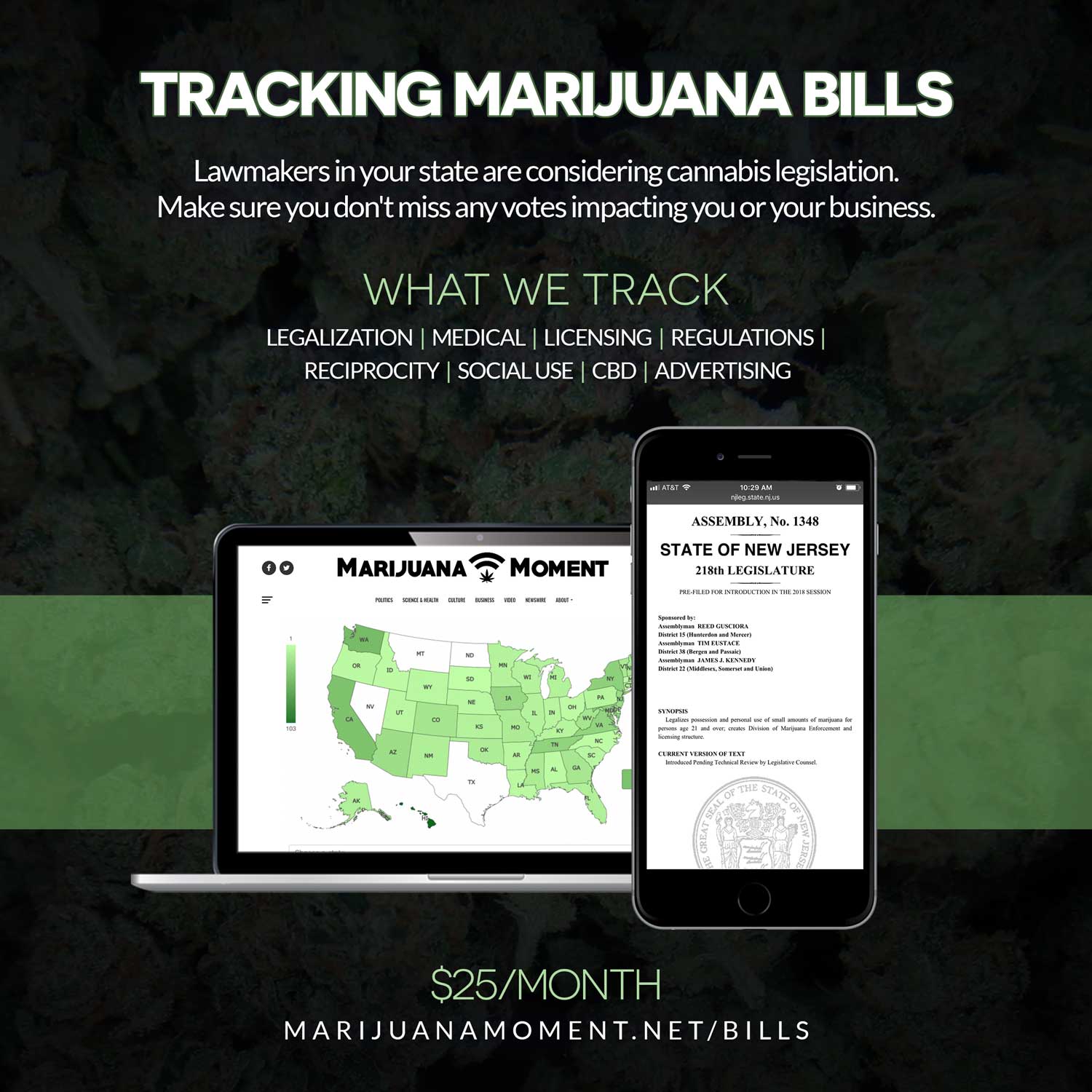
Learn more about our marijuana bill tracker and become a supporter on Patreon to get access.
—
Meanwhile, the Virginia House last week approved a bill to protect the rights of parents who use marijuana in compliance with state law.
Separately, the Virginia Department of Labor and Industry recently published a new outlining workplace protections for cannabis consumers.
Marijuana Moment is made possible with support from readers. If you rely on our cannabis advocacy journalism to stay informed, please consider a monthly Patreon pledge.
