
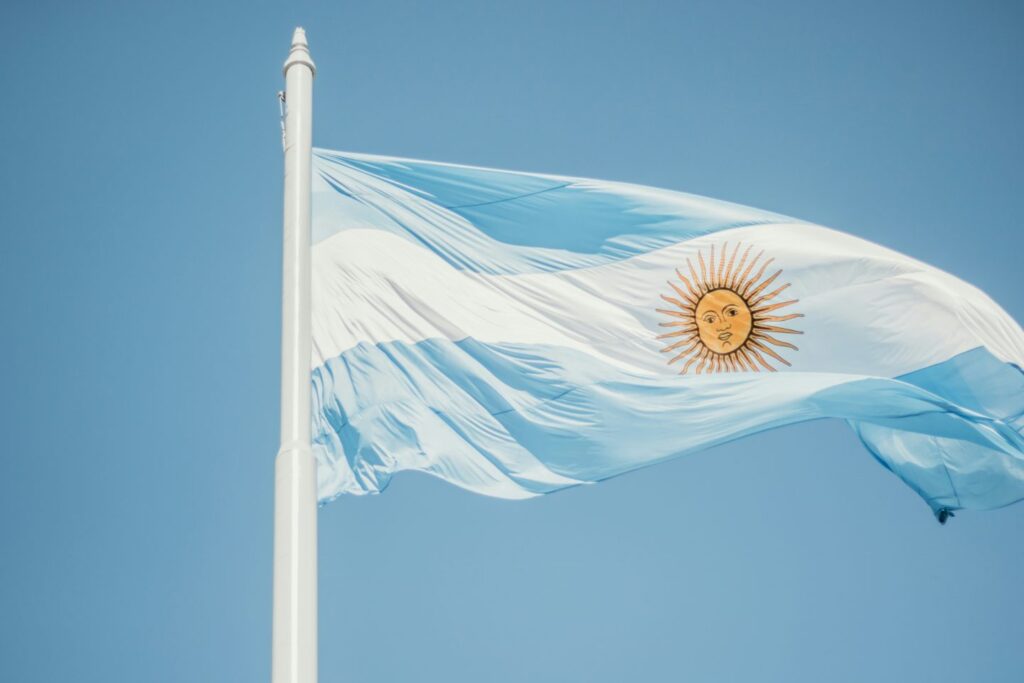

By Robert Hoban & Ivana Sol Vigilante
Argentina has built a patient-first cannabis framework with real access, but the commercial, pharmaceutical, and regulatory pieces still have not fully aligned into a cohesive market.
Argentina’s cannabis progress feels exactly like that lyric: a country that wrote the roadmap before paving the roads. On paper, it is one of the most progressive frameworks in Latin America—patient cultivation, industrial hemp, and pharmaceutical ambition all wrapped into a single national vision. But on the ground, from Buenos Aires laboratories to the agricultural edges of Mendoza, it is less a functioning market and more a caravan idling at the edge of departure.
This is where policy ambition meets operational gravity. To be sure, you get shown the light… in the strangest of places if you look at it right.
In Argentina, that light lives inside REPROCANN, the National Cannabis Program Registry. It is the most functional and human-centered piece of the system, designed not as a commercial engine but as a public health mechanism. Patients can cultivate cannabis themselves or authorize third parties to do so, and nonprofit associations—echoing the social club model seen in Spain—can grow collectively for up to 150 registered patients, with nine flowering plants per patient. The math suggests scale, up to 1,350 plants per organization, but the reality is more constrained, more cautious, and more controlled.
This is not a market. It is access.
And yet, in a region where access has historically been criminalized, REPROCANN represents a meaningful shift in global policy thinking. It reflects a model that prioritizes human need over commercial velocity, aligning with broader international trends that favor patient-first frameworks and harm reduction. But access without a parallel commercial structure creates its own ceiling. Production remains tethered to registered patients, retail channels do not exist, and even research pathways—through institutions such as CONICET or INTA, under the oversight of ANMAT—are complex and rare. As of March 2026, only a handful of approved entities are permitted to sell cannabis directly into this ecosystem.
The light is there, but it does not yet scale. Then, the bus came by and I got on, and that’s when it all began.
Argentina built the bus. It simply has not started driving.
 Photo by XRP Relic on Unsplash
ARICCAME, the Regulatory Agency for the Hemp and Medical Cannabis Industry, was designed to be the backbone of a modern agricultural and pharmaceutical sector. It was meant to translate legalization into economic reality, creating a pipeline from cultivation to export and positioning Argentina as a serious player in the global cannabis supply chain.
Instead, the bus is mostly hauling hemp.
Licenses have been issued largely for low-THC cannabis—fiber, grain, and biomass—defined as cannabis containing less than one percent THC. These are traditional agricultural outputs, not the high-value segments that define modern medical cannabis markets. The cultivation of high-THC cannabis for pharmaceutical use, the very engine that would underpin a true medicinal supply chain, remains largely theoretical. Flower production at scale has not been meaningfully authorized, and the export-oriented infrastructure that many anticipated has yet to materialize.
From a global perspective, this is the inflection point. Other jurisdictions are aligning cultivation with international standards to compete in export markets, while Argentina has constructed the regulatory architecture without fully activating the regulated activity.
At the end of the day, you can’t go back and you can’t stand still.
Then there is INASE, the National Seed Institute, where the future of the industry quietly bottlenecks.
 Photo by Marc Kleen on Unsplash
Genetics are the foundation of cannabis. They determine consistency, quality, and ultimately the viability of any pharmaceutical or commercial endeavor. In Argentina, low-THC varieties can be registered, but high-THC medicinal strains face regulatory hurdles that are difficult, and at times impossible, to overcome. Without registered genetics, there is no formal breeding industry, no standardized inputs, and no scalable pharmaceutical output.
So the industry adapts. Operators look outward, crossing into neighboring jurisdictions like Uruguay to register genetics in a matter of days, then navigating back into Argentina’s constrained framework. It is not simply opportunism; it is necessity. And it reveals a deeper structural issue: when innovation must leave the country to survive, the domestic market cannot fully form.
At the same time, Argentina’s provinces are beginning to move, stepping into the vacuum left by national inertia. Mendoza, among others, is preparing to implement its own licensing systems for both industrial hemp and medical cannabis, aiming to attract capital and accelerate development within its borders. This introduces a new dynamic, one that may push the industry forward while simultaneously fragmenting it. The risk is not failure but divergence, a landscape defined by regional experimentation rather than national cohesion.
Sometimes the lights all shining on me… other times I can barely see. Argentina’s cannabis sector is not broken. It is waiting.
The legal architecture exists, carefully constructed but not yet harmonized. REPROCANN provides access without scale. ARICCAME offers industrial promise without full activation. INASE governs genetics while constraining their development. Each component functions in isolation, but together they have not yet formed a cohesive market.
This is the paradox at the heart of Argentina’s approach: legalization has arrived, but implementation lags behind. The framework is real, but the economy it was meant to create remains largely theoretical.
Looking ahead, Argentina stands at a familiar crossroads, one that many emerging cannabis markets will face in the coming decade. The question is not whether the country can lead, but whether it can align its institutions quickly enough to do so. Climate, talent, and legal foundation all point toward long-term potential. What remains uncertain is execution.
Because the trip Argentina is on is not unique. It is simply early. And the rest of the world is not far behind.
This article is by an external, unpaid contributor. The views expressed are those of the author and do not necessarily reflect those of High Times. This piece has been edited for style, clarity, and length.