

By Hirsh Jain via Cannabis Confidential newsletter. Subscribe here.
How Zorn’s trajectory from litigator to policymaker echoes Thurgood Marshall.
As we look back on the most consequential week in the modern history of American drug policy, much of the attention and fanfare has focused on President Trump, and for good reason.
Trump displayed a unique ability to break from the “Nixonian epistemological prison” that, though long abandoned by the American public, has constrained Presidential thinking on drug policy for more than half a century.
Despite decades of mounting evidence cannabis and psychedelics carry enormous medical potential and a dramatically lower risk profile than many of the substances America eagerly commercializes, including alcohol and pharmaceuticals, most Presidents continued to operate within the bounds of the reckless and unscientific mental architecture that President Nixon built for them more than a half-century ago.
President Trump deserves enormous credit for rescheduling medical cannabis and for issuing an Executive Order on psychedelics that directed federal agencies to accelerate research into their therapeutic potential.
But I believe a more revealing lesson about the trajectory of American social movements can be found in the figure of litigator Matt Zorn.
Zorn, often alongside his partner Shane Pennington, spent a decade bringing carefully targeted challenges to the federal government’s administration of controlled substances law, representing doctors, researchers, and patients caught in regulatory gray zones.
His work exposed the gap between the government’s formal prohibitions and its real-world enforcement, pressing courts to confront inconsistencies in how agencies justify restrictions on emerging therapies.
Zorn became a central figure in a style of drug policy advocacy that relied less on politics and more on strategic litigation to test the limits of federal power.
Last May, Secretary of Health and Human Services (HHS) Robert F. Kennedy Jr. brought Zorn into the Department as Deputy General Counsel.
By most accounts, Zorn played a central role in drafting President Trump’s Executive Order on psychedelics, just a few years after having sued HHS to force public release of the 252-page scientific review recommending cannabis be rescheduled, the same document that became the foundation of last week’s rescheduling order.
The renegade litigator who spent a decade beating federal agencies in court was now drafting their policy from inside the building.
The renegade litigator who spent a decade beating federal agencies in court was now drafting their policy from inside the building.
Zorn’s appointment carries echoes of Thurgood Marshall, the legendary civil rights lawyer who built his career in a similar posture of sustained, strategic litigation against the federal and state governments.
As chief counsel for the NAACP Legal Defense Fund in the 1940s and 1950s, Marshall brought a series of carefully selected cases designed to expose the gap between the Constitution’s promises of equality and the realities of segregation and unequal protection under law, forcing courts to confront the inconsistencies embedded in how “separate but equal” was applied in practice.
That litigation strategy ultimately culminated in Brown v. Board of Education, the landmark 1954 Supreme Court decision that dismantled legal segregation in America’s public schools.
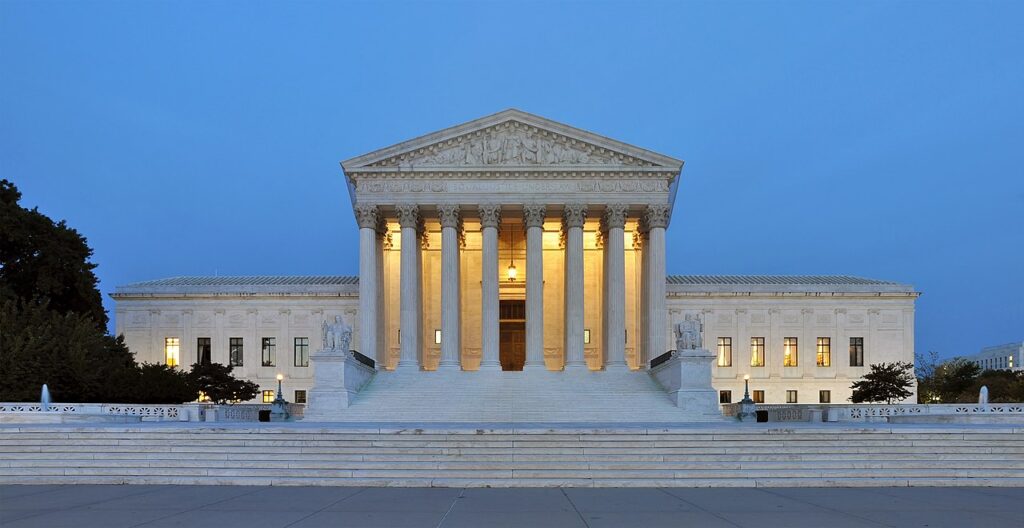
President Lyndon Johnson appointed Marshall Solicitor General in 1965, and two years later elevated him to the Supreme Court as the first African American Justice in the nation’s history.
As Solicitor General, Marshall was in office when Loving v. Virginia was argued before the Supreme Court in 1967, and he filed an amicus brief on behalf of the federal government urging the Court to strike down state bans on interracial marriage as unconstitutional.
The lawyer who had spent his career suing the government for failing to live up to its constitutional obligations was now, from within it, demanding that the Court finally enforce civil rights guarantees more than a century after the abolition of slavery.
Zorn and Marshall both illustrate the partnership between grassroots activism and legal strategy that so often drives social change in America.
Each relied on the groundwork laid by advocates who brought forward the underlying cases, and then prevailed by showing a deeper command of the law than the institutions enforcing it.
Those victories helped bring both their causes and the legal architects of those causes, Marshall and Zorn themselves, into the political mainstream.
From there, each ultimately worked within the system itself to extend and entrench the change they had first forced from the outside.
Their careers point to a broader lesson about how social movements succeed in the United States: through the interplay of grassroots pressure, disciplined legal advocacy, and, eventually, participation within government to carry reforms forward from within.
It is also worth noting that Marshall and Zorn came to serve Presidents who, at least on paper, would not have been seen as natural allies of their movements.
A son of the segregationist South, as Senate Majority Leader Lyndon Johnson had spent much of his career as a significant obstacle to civil rights legislation.
Yet, after decades of Presidential inaction, Johnson came to recognize the historical moment and, as President, drove the passage of landmark civil rights laws at a remarkable pace between 1964 and 1968.
The Civil Rights Act.
The Voting Rights Act.
The Fair Housing Act.
Together, they helped define the multiracial democracy that exists in the United States today.
President Trump similarly followed a long line of Presidents who failed to advance cannabis and plant medicine reform.
Like President Johnson on civil rights, President Trump is not a natural ally on drug policy. He has a law-and-order orientation and is a self-described teetotaler, abstaining from any drug or alcohol consumption.
Yet, like President Johnson, President Trump appears to have recognized a shifting historical moment and moved dramatically last week with the psychedelics Executive Order and the cannabis rescheduling effort.
President Trump now has the opportunity, again like President Johnson, to shape an enduring legacy if he continues to deliver successive policy wins on drug reform over the remaining two and a half years of his term, as Johnson did through a sustained run of civil rights legislation.
The comparison between Zorn and Marshall also points to a recurring feature of social movements, namely, their tendency to fracture at moments of political transition.
It was the fracturing of the civil rights coalition amongst competing factions late in President Johnson’s term that helped clear the political path for Richard Nixon’s rise via his infamous Southern Strategy.
Once in office, President Nixon signed the Controlled Substances Act, establishing the framework that has constrained plant medicine policy for generations, at great cost to the well-being of the American public.
And so, while the cannabis and psychedelic communities are celebrating last week’s historic victories and anticipating further progress, internal division within the movement risks undermining that trajectory.
And uneven or poorly managed implementation of new cannabis and psychedelic regimes could invite a social backlash that stalls reform for decades, in the same way President Nixon’s response hardened the status quo for an entire era.
If we truly believe in the medical and spiritual value of plant medicine, we must focus on building a new, durable epistemological foundation for plant medicine in this country — and avoiding the destructive infighting that has weakened other social movements at precisely the moments of greatest opportunity.
Hirsh Jain, CEO, Ananda Strategy
Yes, participants in the plant medicine movements will, at times, have different interests. Hemp and cannabis operators generally eye each other with suspicion.
Companies competing for market share denounce their rivals.
But if we truly believe in the medical and spiritual value of plant medicine, we must focus on building a new, durable epistemological foundation for plant medicine in this country as a category of legitimate therapeutic value, and avoiding the destructive infighting that has weakened other social movements at precisely the moments of greatest opportunity.
Finally, it is worth noting that Zorn and Pennington are still in their forties.
The federal courts that will shape the next several decades of controlled substances law may yet include jurists like them who spent their early careers litigating these questions from the outside.
That trajectory, from fierce litigator to government service to the judiciary, was Thurgood Marshall’s path.
His elevation to the Supreme Court would have been unthinkable in the early years of his civil rights work.
Yet American legal history has shown that sustained advocacy in service of successful and transformative social movements can, over time, become institutional authority.
And so, if those of us in the plant medicine movement meet this historical moment with discipline and cohesion in the years ahead, it would not be surprising if one of the movement’s leading legal advocates also one day followed a similar path to the nation’s highest court.
Hirsh Jain is the CEO of Ananda Strategy, a cannabis-focused business advisory firm that works with cannabis brands, retailers, distributors, technology platforms and other businesses on matters ranging from competitive licensing, legislative strategy, regulatory intelligence, market expansion, business litigation, internal and external communication and other varied corporate initiatives.
This article is from an external, unpaid contributor. It does not represent High Times’ reporting and has not been edited for content or accuracy.