

This article originally appeared on IgniteIt and is republished here with permission.
The Trump administration’s rescheduling order contains a little-noticed provision requiring the DEA to buy and resell state-legal medical cannabis. Attorneys say it’s bizarre. Operators say it’s a threat to small businesses. Nobody knows exactly how it works yet.
The Trump administration’s cannabis rescheduling order arrived this week with a mix of anticipation and confusion. The move marks the most significant federal shift in cannabis policy in decades, but the practical impact will not be clear until the Department of Justice and the Drug Enforcement Administration release the rules governing how rescheduling will work in practice. Until then, operators and attorneys are left reading between the lines while also expecting legal challenges from prohibitionist groups determined to stop the policy before it takes effect.
One provision in particular has sparked early debate: a requirement that the DEA purchase and then resell state-legal medical cannabis at a nominal price to satisfy the United States’ obligations under the Single Convention on Narcotic Drugs, an international treaty on drug enforcement. Attorney Marc Hauser, who writes the Cannabis Musings Substack and serves as general counsel at Khalifa Kush, as well as chief of staff and director at Las Vegas dispensary Jardín, highlighted the issue in a recent post.
“I’m not making this up, the DEA will buy and sell cannabis.”
Marc Hauser, attorney and general counsel, Khalifa Kush
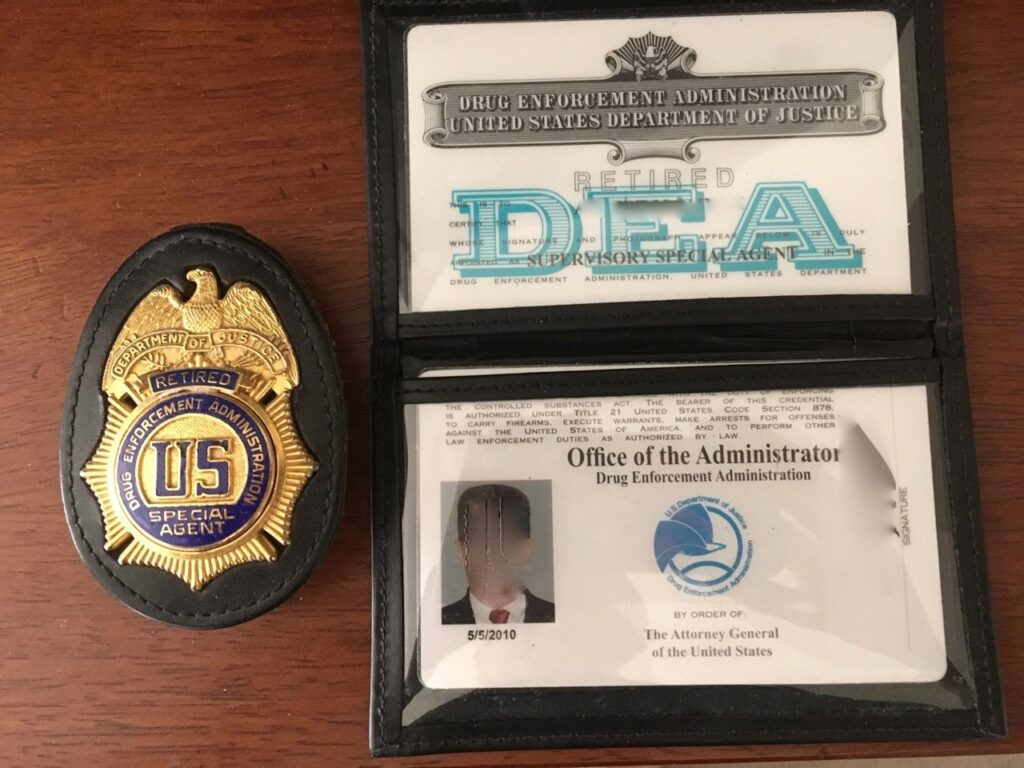
That line raised an obvious question now sitting at the center of the industry’s early reaction: could the agency historically tasked with suppressing cannabis end up functioning as the nation’s biggest weed dealer?
A treaty workaround with limited clarity
Hauser said the structure appears designed to satisfy the treaty’s requirement that a government agency serve as the exclusive purchaser of cannabis production. He believes the administration intends the process to be largely procedural rather than a new federal bottleneck.
“It seems like the intent is to make it sort of a perfunctory process,” he said, noting that the DOJ appears focused on avoiding treaty violations rather than inserting the DEA into the commercial flow of cannabis.
“They don’t want to make this a barrier to access for medical cannabis,” he said.
What the DEA purchase-and-resale mechanism means in practice
Required under the Single Convention on Narcotic Drugs — the international treaty the U.S. uses to justify the rescheduling pathway Blanche used
DEA buys cannabis from licensed manufacturers at a nominal price, then resells it back — intended as a compliance formality, not a commercial transaction
DEA maintains access to manufacturer facilities until each transaction is complete
How burdensome the oversight will be in practice remains undefined — the order leaves major implementation questions unanswered
Still, the order leaves major implementation questions unanswered. The DEA would have access to facilities until the transaction is complete, and the agency would be responsible for auditing and overseeing registered manufacturers. Whether that oversight ends up being light or heavy is unknown.
“There are definitely ways that DEA could make life a little more difficult. But I don’t really see that happening in a way that’s going to bring things to a halt.”
Marc Hauser, attorney and general counsel, Khalifa Kush
He described himself as “modestly optimistic,” noting that this is not his usual posture.
A second legal expert calls the structure ‘bizarre’
Irina Dashevsky, co-chair of the cannabis practice at Greenspoon Marder, agreed that the mechanism is unusual and said the lack of detail makes it difficult to predict how burdensome it will be.
“I do think it’s bizarre. I’m not aware of the DEA taking possession of any other Schedule III drug.”
Irina Dashevsky, co-chair, Cannabis Practice, Greenspoon Marder
She expects the purchase-and-resale requirement to function more like paperwork than literal federal handling of cannabis, but she emphasized that the order leaves too many blanks to be confident.
Dashevsky said most state-licensed facilities already operate under strict inspection and security rules, which could make DEA registration manageable if the agency builds on existing systems. But if the DEA requires pharmaceutical-grade retrofits, the burden could be significant.
“It really depends on the meat that needs to go on the bone. This could become a major compliance burden. It really just depends.”
Irina Dashevsky, co-chair, Cannabis Practice, Greenspoon Marder
She also raised a question many operators are now asking: whether DEA-licensed medical producers and retailers could legally transact across state lines. The order does not answer that, but she sees a plausible reading that suggests interstate commerce could open for entities that obtain the new federal license.
Small operators see a different risk
While attorneys focus on compliance and treaty mechanics, operators are already thinking about who will participate in whatever system emerges. Micah Sherman, founder of Washington craft brand Raven, said the structure could tilt toward large, well-capitalized companies.
“They’re going to have this DEA monopoly relationship with the purchase of cannabis. And I don’t see me, or anybody like me, or that I know, getting to participate in that sort of relationship as we try to sell our small amounts of flowers to the people in our communities.”
Micah Sherman, founder, Raven
What remains unanswered
How burdensome DEA registration and oversight will be for licensed operators
Whether pharmaceutical-grade facility retrofits will be required
Whether DEA-licensed medical operators could legally transact across state lines
How small and independent operators participate in the new federal framework
How the medical-only split interacts with existing adult-use state markets
When and how courts will rule on expected legal challenges from prohibitionist groups
Sherman’s concern reflects a broader fear among small and independent operators that the new framework could create a federal gatekeeper that favors multistate companies with compliance teams and capital reserves. Adult-use businesses like Raven are not included in the order at all, which only deepens the worry that smaller operators will be left out of whatever system emerges, even if the DEA ultimately intends the process to be straightforward.
The medical-only split adds more complexity
Like Sherman, both Hauser and Dashevsky noted that the order reschedules only state-legal medical cannabis, leaving adult-use products in Schedule I. Dashevsky called the distinction “nonsensical,” pointing out that the Controlled Substances Act schedules substances, not consumer intent.
“It’s the same plant, it’s the same products. The notion that your purpose for consuming it is what drives whether it’s Schedule I or Schedule III is preposterous.”
Irina Dashevsky, co-chair, Cannabis Practice, Greenspoon Marder
She expects the split to put pressure on Congress to pass companion legislation, especially in banking and financial services. She has been involved in federal lobbying on that front for years and believes the timing is now favorable for bills like SAFE Banking to advance.
A historic shift with a long road ahead
For all the uncertainty, Dashevsky said the order represents the first meaningful federal cannabis reform in roughly half a century. She sees it as the opening move in what could become a broader federal overhaul, assuming Congress and federal agencies follow through with the necessary implementation work.
But that implementation work is the part no one can see yet. The DEA will need to define licensing standards, explain how the purchase-and-resale mechanism works in practice, and clarify how the medical-only split interacts with existing state markets. The DOJ will need to fill in the legal framework. And the courts will almost certainly be asked to weigh in once prohibitionist groups file their expected challenges.
Until then, the industry is left with a provocative possibility: that the DEA could soon become, at least on paper, a central buyer and reseller of medical cannabis. Whether that makes the agency a treaty-compliance middleman or something closer to a federally sanctioned cannabis distributor is a question that will not be answered until the government releases the rules that give this order its real shape.
Get more insights on how policy developments affect businesses at IgniteIt events. The next one will take place in Cincinnati, Ohio, on April 30.
This article is from a High Times content partner. It does not represent High Times’ reporting and has not been edited for content or accuracy.