
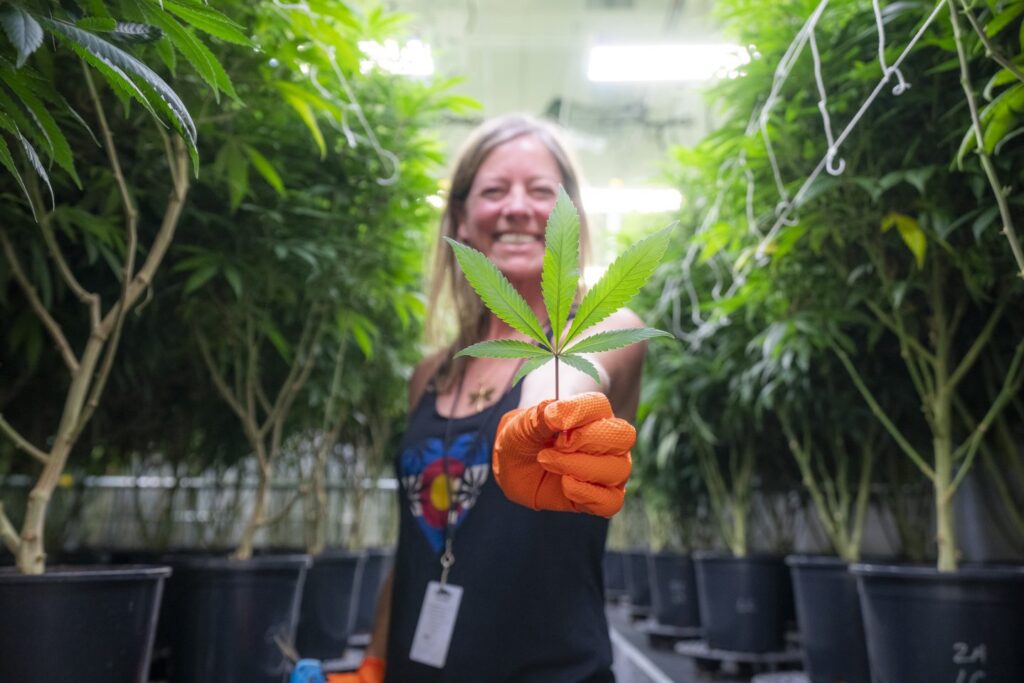

How weed, music, and the mountains shaped my life—and put me in office.
I didn’t set out to become a mayor. If you had met me years ago—somewhere in a crowd at a Grateful Dead show, completely wrapped up in the music and the feeling of connection—you probably wouldn’t have guessed politics was anywhere in my future. What stayed with me from those early days wasn’t just the sound, it was the sense of community. Everyone was open, present, and connected. Cannabis was part of that space, but it wasn’t the headline. It just existed there, woven into the experience.
That was the beginning of my relationship with cannabis. It was social, tied to music, something shared. Over time, it became everything else.
 Angry Peaches—The Mountain Orchid’s signature cut, known for loud terps and unmistakable character.
When Cannabis Became More Than Social
For a long time, cannabis stayed in that lane. Through college, it showed up in the same way—music, gatherings, traditions that revolved around community. It was light, fun, and familiar. But as I got older, my relationship with cannabis changed.
After I moved to Colorado, I developed Raynaud’s phenomenon, a condition that restricts blood flow and makes cold weather physically painful. If you’ve ever been to Colorado, you know it’s not exactly known for its lack of cold months. I was offered prescriptions, but I started noticing something on my own. When I used cannabis, my circulation improved. The pain eased. It wasn’t abstract; these were real, tangible results.
That realization shifted everything. Cannabis stopped being something I used occasionally and became something I depended on. And once it becomes medicine, you start asking different questions. You want to know how it’s grown, what’s in it, and whether you can trust it.
In 2009, I got my medical card and started growing my own plants. At first, it was about access. But it quickly became something deeper.
I fell in love with the process.
I grew up around plants, especially orchids. My mom had a natural ability to care for them, and I didn’t realize until later how much that shaped me. I paired that instinct with my background in chemistry and started diving into cultivation in a serious way.
Cannabis became a teacher.
I started as a caregiver, growing for myself and for others who needed it. But the more time I spent in the garden, the more intentional it became. I wanted to understand everything—how different plants expressed themselves, how environment affected outcome, how small changes created big results.
When I moved to Montezuma, Colorado, I brought orchids with me from my childhood home. Somehow, at 10,400 feet, they bloomed.
A friend saw them and said, “You are the Mountain Orchid.”
The name stuck.
 Montezuma, Colorado—home of The Mountain Orchid, perched at 10,400 feet.
  “Monte,” the unofficial guardian of Montezuma.
The Town That Nudged Me Into Politics
Montezuma is small—fewer than a hundred full-time residents—and remote in a way that makes everything feel a little more real. You can’t hide from problems in a place like this. You have to deal with them.
When Colorado legalized recreational cannabis, our town didn’t follow. A small group of people controlled local decisions, and they resisted change, even though many of us felt differently. I was serving as a trustee at the time, watching how things operated, and it didn’t sit right with me.
Then the mayor resigned. The board planned to appoint a replacement instead of holding an election. That’s when I spoke up. What if I want to be mayor?
That question forced an election for the first time in decades. It wasn’t smooth. There were disputes, illegal votes, and a lot of tension in a very small town.
But I ran anyway. And I won.
Winning didn’t mean things got easier. My first years as mayor were tough. The town was divided, and I was constantly working against resistance from people who didn’t support the direction I believed in.
Then the mountain stepped in.
A spring melt destroyed the only road into town. Overnight, we were cut off. There was no room for politics—just a problem that needed to be solved. I worked alongside county and state officials for months to restore access and keep people safe.
Moments like that change things. Over time, trust replaced resistance. Today, the town feels united in a way it didn’t before. We’ve found common ground, even if it took a while to get there.

 Lesley and Jay Davis in the garden—hands-on, every step of the way.
Building The Mountain Orchid
Somewhere in the middle of all of this, I built The Mountain Orchid.
My business partner and I created a cultivation facility from scratch, designed around one idea: cannabis deserves hands-on care. We didn’t want a warehouse. We wanted a living environment. I started everything from seed. No outside clones. No shortcuts. Phenotype hunting became my obsession—searching for plants that stood out, especially in aroma. If it doesn’t stop me in my tracks, it doesn’t stay.
We hand-water, hand-harvest, and stay involved in every step. In a market that’s increasingly about scale, we stayed small on purpose.
 Harvest Host Danny Musengo bringing live music into The Mountain Orchid bloom room.
Music in the Garden
Music has always been part of my life, so it naturally found its way into the grow.
During COVID, our friend Keller Williams came and played a private set in the garden while we were working. It changed the energy in a way I’ll never forget. After that, it became tradition.
Every harvest is now named by a musician. I call them Harvest Hosts. Their music plays throughout the flowering cycle, and many of them come in and perform live for the plants. It might sound unconventional, but I’ve seen the difference. Plants respond to their environment. Energy matters.
Some of our most meaningful moments have come from those sessions—hearing live music fill the garden, watching the plants thrive, feeling that connection between sound, growth, and intention.
It brings everything full circle for me. Music and cannabis have always been connected in my life. Now they’re inseparable.


 At 10,400 feet, Lesley Davis grows more than cannabis—she grows with intention.
Rolling With It
The hardest part of this journey hasn’t been politics or even personal setbacks.
It’s staying in business. The cannabis industry has shifted fast. Prices have dropped, taxes remain high, and large-scale grows can produce at a fraction of the cost. As a small, hands-on operation, we can’t compete on volume.
So we don’t.
We focus on quality, on relationships, on the people who understand the difference between something grown with intention and something mass-produced. But it’s not easy. The margins are tight, and survival isn’t guaranteed.
Still, I believe in what we’re doing.
Cannabis has been a constant in my life, even as everything else changed. It started with music and community. It became medicine. Then it became my work, and eventually, it led me into politics. It shaped how I see the world, how I care for people, and how I build things.
I didn’t plan any of this. But standing here now—as a grower, as a mayor, as someone who’s built a life at 10,400 feet—it all makes sense.
Cannabis didn’t just influence my path. It created it.
Photos courtesy of Tobin Voggesser/NOCOAST
This article is from an external, unpaid contributor. It does not represent High Times’ reporting and has not been edited for content or accuracy.