
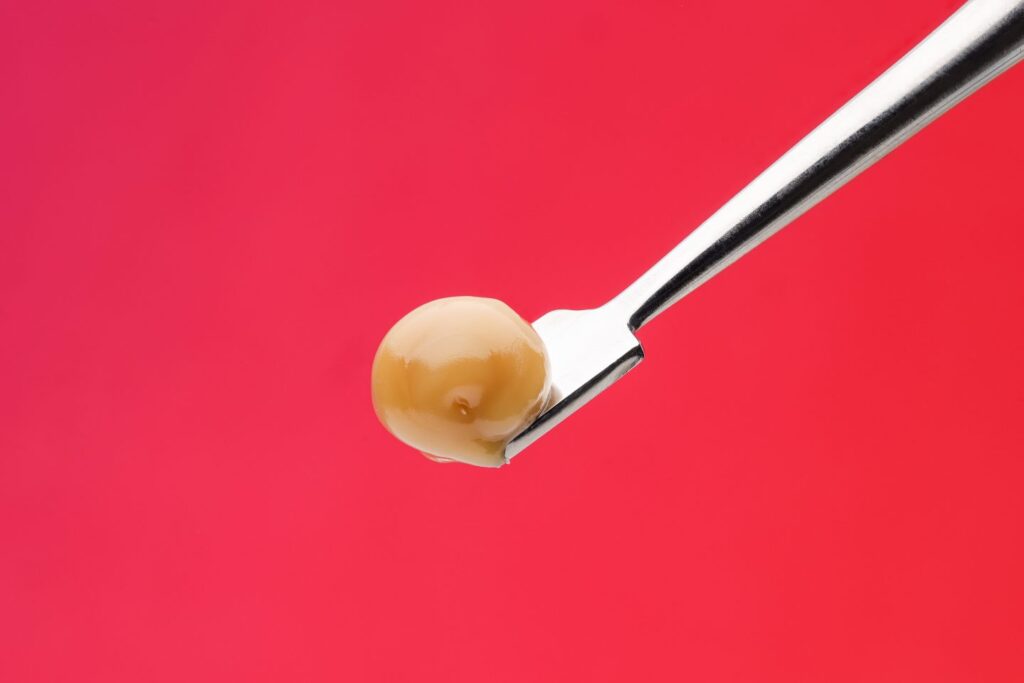

From home labs and deadly butane blasts to solventless rosin, police raids, and a legal gray zone, Spain is entering a more potent and more volatile phase of cannabis culture.
On a cold night in late January 2025, a home lab in Espinardo (Murcia) ended in tragedy. Two young men were killed when a butane-based cannabis extraction attempt went catastrophically wrong. As the local press later reported, the pair had been attempting to produce highly concentrated hash oil –BHO, short for butane hash oil– by blasting cannabis with flammable gas. The blast leveled the walls, igniting a deadly fire.
According to police reports and recent busts, small-scale “labs” are popping up all over Spain, from Murcia to the Canary Islands.
“We can’t yet speak of a stable market, but we are seeing more frequent and sporadic appearances,” stated an inspector for La Verdad. “These are small groups have learned to cook the drug themselves, in private homes. There’s no organized criminal structure behind it, like there is with tusi or cocaine.”
The evidence points to a new chapter in Spain’s drug scene: a surge in potent cannabis concentrates, as ultra-pure hashish derivatives are increasingly appearing in labs and on the illicit market.
Home Labs and Drug Raids: Arona and Los Alcázares
Spain’s first major rosin lab bust occurred in February 2024 in Arona, Tenerife. National Police agents discovered what was considered Spain’s first cannabis concentrate production facility. Inside a suburban garage, five people —including a 29-year-old identified as the chief chemist— were arrested. The undercover team seized 1.7 kilos (3.75 pounds) of liquid rosin, along with 54 kilos (119 pounds) of cannabis and 145 fully grown plants. The lab was fully equipped with pressing machines, filters and safety lighting.
Police explained that the Arona team used a “bubble hash” technique to make rosin, which is way safer than the butane gas method. Wet cannabis buds were mixed with ice and water, filtered through a series of mesh screens to capture trichomes, and the collected paste was then freeze-dried and pressed into a highly purified resin. This solventless rosin extraction method avoids dangerous solvents, but still yields a concentrate far stronger than normal hash. Reportedly, 75 kilos (165 pounds) of plant material were needed to produce 1 kilo of the final product –a yield of just ~1.3%.
Just weeks later, in early March 2024, the National Police struck another rosin lab, this time on the mainland. They uncovered a massive processing operation in Los Alcázares, a coastal town of 18,500 people in the Murcia region. 17 suspects (mostly from Murcia and Alicante) were arrested, and two alleged ringleaders were sent to jail. Police reports noted six giant grow-rooms full of flowering plants, as well as a fully decked rosin “distillation” lab (with vacuum ovens, presses and cold storage). Altogether, investigators confiscated about 2,000 plants and 32 kilos (70.5 pounds) of cannabis buds, alongside 1.5 kilos (3.3 pounds) of liquid rosin. This was, at the time, “one of the largest rosin seizures at the national level”.
In October 2025, another national police operation in Murcia’s capital busted a family group on La Ñora street, seizing 4,300 cannabis plants and more than 1 kilo (2.2 pounds) of rosin, reported La Verdad.
Crucially, as the police stress, these are home labs —not “narcos”, not large-scale trafficking organizations moving bulk shipments across borders. A big motivation behind the surge of homemade labs and small operations is the low price.
So what do these labs produce, and what do they earn from it? Rosin, by design, concentrates THC to extreme levels. Producing one kg of rosin takes roughly 75 kg (165 pounds) of buds. In a large dataset reported by the police, the price of a gram of naturally extracted resin ranges from EUR 20 to EUR 50, but is cheaper in clubs (going from EUR 4.5 to EUR 15). Rosin extracted without solvents and up to 90% THC can go for as much as EUR 100 (USD 114), as our sources in Alicante confirmed.
Extraction 101: Bubble Hash, Butane, and Fire
To truly understand rosin, it helps to grasp where the risks come from.
There are two main routes to cannabis oil: solventless (using heat and pressure) and solvent-based (usually with butane). Rosin strictly refers to solventless extracts. In practice, producers either soak buds in ice water to make bubble hash and press it, or they press fresh or frozen buds directly.
By contrast, BHO extraction relies on highly flammable solvents. Liquid butane (or a propane-butane mix) is passed through dried cannabis material in a closed tube. The solvent dissolves cannabinoids and terpenes; when warmed or air-purged, the butane boils off, leaving behind an amber oil (sometimes called shatter, budder or wax).
In Atarfe (Granada), a blast in April 2025 killed one person after a BHO extraction ignited. It mirrored the Espinardo explosion both in scale and cause. It only takes a single spark to ignite a butane vapor cloud.
But solventless rosin is different from a chemical perspective. This technique avoids hazardous gases and purges, relying instead on heat-controlled plates to squeeze resin from bubble hash or flower. Still, DIY setups can be dangerous: lack of hygiene, uncontrolled temperatures, or amateur equipment can produce impure products or result in burns. Nevertheless, it does not pose the explosion risk that can damage building structures and people.
Europe’s Trend Toward Concentrates
The rise of rosin in Spain is part of a broader European and global trend. For decades, cannabis policy and consumer tendencies were dominated by unprocessed flower and resin. But as legal markets have matured (in North America, for instance), demand has shifted strongly toward concentrates and edibles. The latest European Drug Trends Monitor notes a continued increase in the presence of highly concentrated products.
Spain in particular is moving in this direction. Its favorable climate for home growing has given rise to some of the strongest cannabis strains in Europe. With high-potency buds so common now, extract production became a logical next step.
Meanwhile, Spain’s legal framework hasn’t kept up with the changing reality. The law is essentially the same it’s been for decades: private possession and cultivation of small amounts is decriminalized (often enforced only with small fines), but public use or any trafficking is punishable.
Spain’s cannabis social clubs, for instance, operate in a legal vacuum. They are private associations where adults can share limited cultivation, but these clubs are increasingly wary of being linked to extract production. After the La Ñora raid, some clubs banned on-site pressing or even display of rosin.
At this stage, activists and some lawmakers argue for a regulated framework that includes concentrates. Suggested reforms include:
- Decriminalizing solventless extraction for personal use.
- Regulating cannabis clubs with explicit rules on extracts.
- Launching harm-reduction campaigns about BHO dangers.
- Expanding lab testing and safety guidelines.
Ultimately, Spain faces a choice: trying to suppress the rosin wave through raids and arrests, which will likely only increase the price of products and the temptation of making them in homemade and unsecure labs, or manage it with pragmatic regulation and safety education anchored in a harm reduction paradigm.