
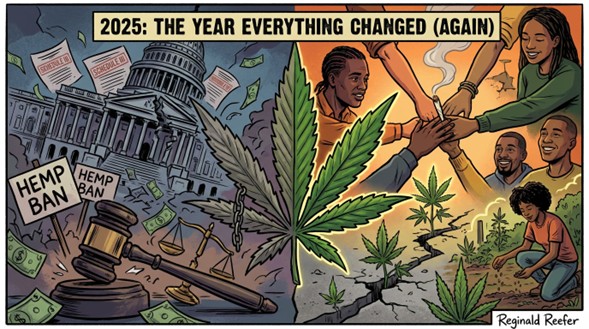

The Trump administration is officially moving ahead with the federal reclassification of marijuana.
More than four months after President Donald Trump signed an executive order directing the Department of Justice to expeditiously finish the process of moving cannabis from Schedule I to Schedule III of the Controlled Substances Act (CSA), Acting Attorney General Todd Blanche on Thursday announced that rescheduling is finally happening.
“The Department of Justice is delivering on President Trump’s promise to expand Americans’ access to medical treatment options,” Blanche said. “This rescheduling action allows for research on the safety and efficacy of this substance, ultimately providing patients with better care and doctors with more reliable information.”
The process will happen in phases, DOJ said.
Under an order signed by Blanche, marijuana products regulated by a state medical cannabis license will move to Schedule III, as will any marijuana products that are approved by the Food and Drug Administration (FDA).
Then, beginning on June 29, there will be a new expedited administrative hearing process to consider the broader rescheduling of marijuana from Schedule I to Schedule III.
Terry Cole, administrator of the Drug Enforcement Administration (DEA), said that the agency is “expeditiously moving forward with the administrative hearing process—bringing consistency and oversight to an area that has lacked both.”
DOJ is moving to end a prior administrative hearing process on the rescheduling proposal that stalled near the end of the Biden administration amid litigation from pro-reform parties that alleged improper agency communications and witness selection decisions.
“State medical marijuana regulatory systems have matured significantly since California first authorized medical use in 1996, and today the vast majority of States maintain comprehensive licensing frameworks governing cultivation, processing, distribution, and dispensing of marijuana for medical purposes,” Blanche said in his order. “These state regimes have developed robust infrastructure for preventing diversion, ensuring product safety, maintaining records, and conducting facility inspectionsfunctions that fulfill the objectives of federal registration and recordkeeping requirements.”
“The Attorney General has reviewed the operation of these state systems and finds that, taken as a whole, they demonstrate a sustained capacity to achieve the public-interest objectives that underlie the CSA’s registration framework, including protecting public health and safety and preventing the diversion of controlled substances into illicit channels.”
Under the decisive leadership of @POTUS, this Department of Justice is delivering on his promise to improve American healthcare. This includes:
• Immediately rescheduling FDA-approved marijuana and state-licensed marijuana from Schedule I to Schedule IIl
• Ordering a new,… pic.twitter.com/DUtqKQgavl
— Acting AG Todd Blanche (@DAGToddBlanche) April 23, 2026
On Wednesday, several news outlets reported that action on the cannabis rescheduling proposal was imminent.
Rescheduling won’t federally legalize cannabis, but it would remove certain Schedule I research barriers, while benefitting state-licensed marijuana businesses by allowing them to take federal tax deductions they’re currently barred from under an Internal Revenue Service (IRS) code known as 280E.
There has been some uncertainty about how DOJ would navigate the issue. While the department faced a mandate from the president, top officials have been notably silent on the issue in the months since receiving that directive—even as the White House touted Trump’s order as an example of a policy achievement during the first year of his second term.
Trump himself complained last weekend that federal officials were “slow-walking” following through on his cannabis order.
“You’re going to get the rescheduling done, right, please? Will you get the rescheduling done, please?” Trump said during a signing ceremony for a separate order on psychedelics, seeming to speak to a Department of Justice or White House official during an event in the Oval Office on Saturday. “You know, they’re slow-walking me on rescheduling. You’re going to get it done, right?”
A Justice Department spokesperson told Marijuana Moment in January that they had no “comment or updates” to share on the topic. However, an agency official more recently said that DOJ was “working to identify the most expeditious means of executing the EO.”
That phrasing was notable, signaling that the department was uncertain about the administrative pathway to finalize rescheduling. The hope among advocates and industry stakeholders was that the process would be more simple, with a final signature on the existing reform proposal that was released following a scientific review initiated under the prior Biden administration.
When Trump issued the rescheduling order late last year, Pam Bondi was attorney general. She opposed cannabis reform as Florida’s attorney general and she didn’t attend the president’s signing ceremony for the rescheduling executive order.
Now, the process is being overseen by Blanche, who said in response to a written question about marijuana rescheduling during his confirmation process to become deputy attorney general that he would “give the matter careful consideration after conferring with all relevant stakeholders, including DEA personnel.”
DEA and reform proponents earlier this month submitted a joint status report on an interlocutory appeal that concerns allegations of agency bias and improper communications with anti-rescheduling parties during the review process on the proposal.
“To date, Movants’ interlocutory appeal to the Administrator regarding their Motion to Reconsider remains pending with the Administrator,” the filing from attorneys representing DEA and cannabis reform proponents challenging the process says. “No briefing schedule has been set.”
The president’s rescheduling directive was overwhelmingly popular among cannabis consumers, according to a recent poll from the cannabis telehealth platform NuggMD.
About 83 percent of respondents said they support the executive order, compared to 7 percent who expressed opposition and 10 percent who said they didn’t have an opinion about the proposed reform.
The cannabis rescheduling process was initiated by then-President Joe Biden, under whom the Department of Health and Human Services (HHS) published a 252-page report finding that marijuana does not meet the criteria to remain classified as a Schedule I drug.
The Department of Justice later issued a proposed rule to move cannabis to Schedule III, which then led to the stalled administrative hearing process.
Former Rep. Matt Gaetz (R-FL), Trump’s first pick for attorney general this term who ultimately withdrew his nomination, recently raised eyebrows after posting on X that he’s been told that DEA is actively drafting a rescheduling rule and intended to issue it “ASAP.”
There was some confusion around that point, however, as a rule was already pending before the Justice Department—and a new rule would have presumably been subject to additional administrative review and public comment.
A Democratic senator told Marijuana Moment in January that it’s “too early to tell” what the implications of Trump’s cannabis order would be—saying that while there are “things that look promising” about it, he is “very concerned about where the DOJ will land.”
“The ability of the Trump administration to speak out of both sides of their mouth is staggering,” Sen. Cory Booker (D-NJ) said. “So I’m just going to wait and see right now. Obviously, there’s things that look promising—to end generations of injustice. I really want to wait and see.”
—
Marijuana Moment is tracking hundreds of cannabis, psychedelics and drug policy bills in state legislatures and Congress this year. Patreon supporters pledging at least $25/month get access to our interactive maps, charts and hearing calendar so they don’t miss any developments.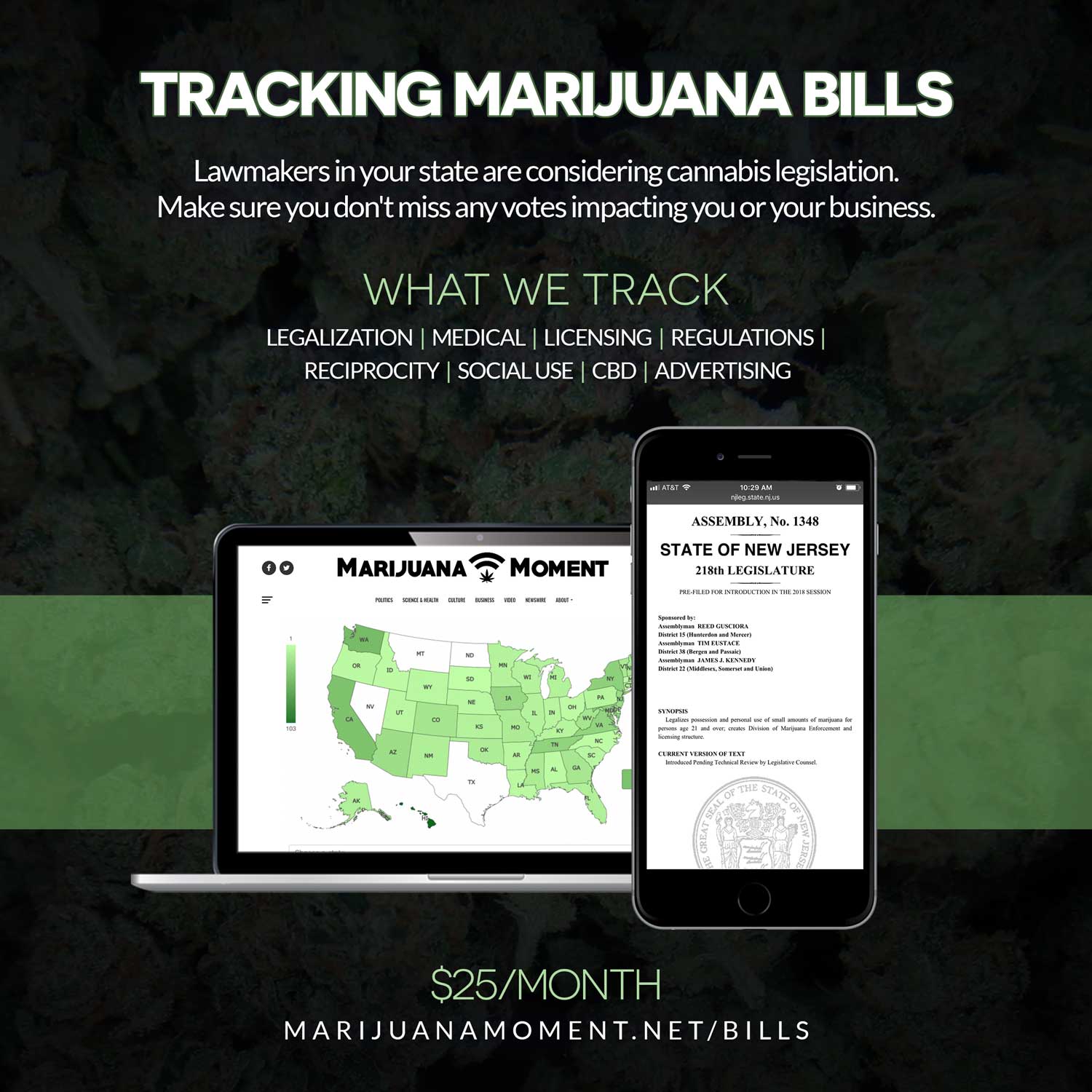
Learn more about our marijuana bill tracker and become a supporter on Patreon to get access.
—
Also in January, two GOP senators filed an amendment to block the Trump administration from rescheduling cannabis, but it was not considered on the floor.
A recent Congressional Research Service (CRS) report discussed how DOJ could, in theory, reject the president’s directive or delay the process by restarting the scientific review into marijuana.
The Department of Justice separately missed a congressionally mandated deadline in January to issue guidelines for easing barriers to research on Schedule I substances such as marijuana and psychedelics.
Marijuana Moment is made possible with support from readers. If you rely on our cannabis advocacy journalism to stay informed, please consider a monthly Patreon pledge.
