
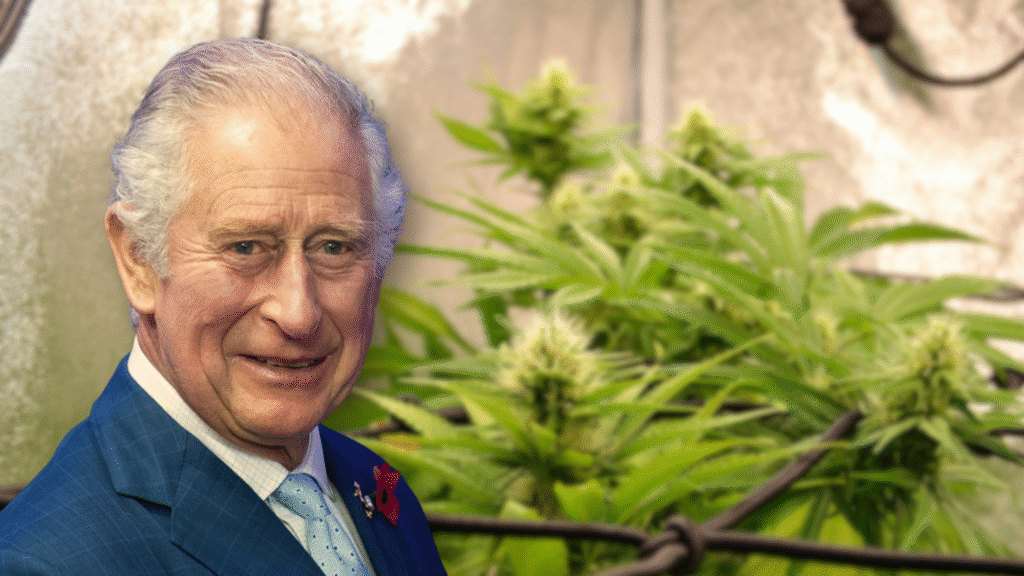

From medical rumors to a possible upper-crust grow op, a new story is once again linking King Charles III to cannabis. This time, however, it has nothing to do with health speculation or the monarch’s well-known passion for botany. Instead, the connection comes by way of a police raid at a historic property tied to his royal past.
- A Royal-Era Mansion Turned Into an Indoor Grow
- Another Odd Coincidence Linking King Charles III to Cannabis
Police in North Wales discovered a large-scale illegal cannabis cultivation operation inside Plas Glynllifon, a 19th-century mansion that hosted the investiture ball for then-Prince of Wales Charles—now King Charles III—in 1969.
According to North Wales Police, officers executing a search warrant under the Misuse of Drugs Act uncovered what they described as a “significant grow operation” on the building’s top floor. Superintendent Arwel Hughes told the BBC: “We uncovered a grow, which was on the top floor of the building. We estimate around 12 rooms with grows in them and they were fairly mature plants.”
Authorities also confirmed that the operation relied on illegally tampered electrical systems and diverted water lines into the building—common hallmarks of sophisticated clandestine grow sites.
No arrests have been made so far, though police say forensic work and digital evidence analysis remain ongoing as the investigation continues.
A Royal-Era Mansion Turned Into an Indoor Grow
The story quickly drew attention across the UK not only because of the operation’s scale, but because of the property itself. We’re talking about Plas Glynllifon, a sprawling aristocratic mansion with a dramatic history, decaying interiors, and its own local folklore. Most notably, the estate hosted the official ball following King Charles III’s 1969 investiture as Prince of Wales, tying the now-crumbling property directly to modern royal history.
Alan Fryer / Plas Glynllifon
Built in the 1830s near Caernarfon in Gwynedd, the Grade I-listed neoclassical mansion once belonged to Lord Newborough and was long considered one of North Wales’ grandest private estates. In recent years, however, the largely vacant property has fallen into disrepair, its decaying halls becoming a magnet for urban explorers and paranormal enthusiasts.
The sprawling estate has reportedly earned a haunted reputation over the years, with visitors claiming eerie phenomena inside its deteriorating corridors. One of the mansion’s most enduring legends centers on Maria Stella Chiappini, an Italian-born aristocrat tied to the property whose dramatic life later inspired ghost stories surrounding the estate.
Those same historic halls, stone walls, and aristocratic interiors have now been overshadowed by a far less ceremonial scene: entire formerly ceremonial rooms transformed into clandestine grow spaces.
Another Odd Coincidence Linking King Charles III to Cannabis
there is no indication that the current British king is connected whatsoever to the operation or to the property’s current use, the story inevitably revives memories of another cannabis-related headline that circulated widely in 2025: rumors claiming that Charles had explored medical cannabis as part of his cancer treatment.
Those reports, never officially confirmed, claimed the monarch had considered cannabinoids as a therapeutic complement, consistent with his long-documented interest in integrative medicine, organic agriculture, and plant-based therapies.
Though the two stories are entirely unrelated, this latest development adds yet another chapter to the strange and recurring pattern of headlines linking the British Crown to cannabis.
It also highlights a uniquely British paradox: while medical cannabis has been legal since 2018 with a doctor’s prescription and regulated access continues to expand slowly, the illicit market continues to meet substantial parallel demand, often through increasingly sophisticated clandestine operations set up even in historic properties and heritage buildings.
In this case, the contrast could hardly be more British: a mansion once used for royal pageantry has, decades later, become the site of a massive clandestine cannabis grow.